Faculty Conversation: Advancing Health Policy Through Equity-Centered Data
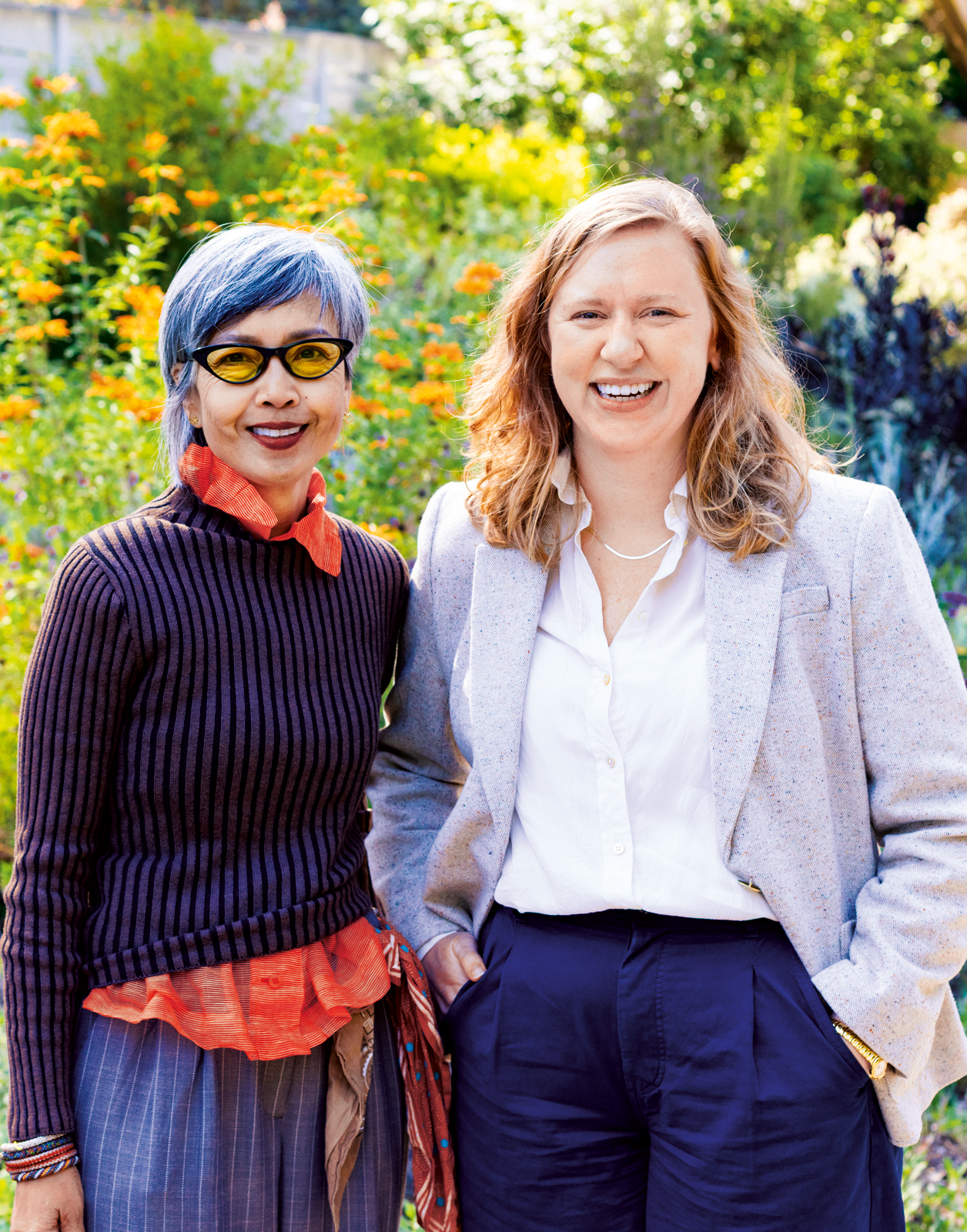
Drs. Ninez Ponce and Kathryn Leifheit
Among the most powerful vehicles by which public health saves and improves lives is through policy. From vaccine mandates and tobacco control laws to regulations that ensure clean air and water, policies informed by public health research and advocacy have far-reaching impacts that affect us all. But some policies bring more benefits than others, and not all communities reap the same rewards. Moreover, identifying the evidence for what’s needed and what’s best from the public health perspective isn’t always sufficient given the realities of competing interests and political considerations in the policy development process.
Dr. Ninez Ponce, professor and Fred W. and Pamela K. Wasserman Endowed Chair of UCLA Fielding’s Department of Health Policy and Management, champions better health data, especially for marginalized groups. As director of the FSPH-based UCLA Center for Health Policy Research, Ponce oversees the center’s California Health Interview Survey (CHIS) — the largest state health survey and a critical source of information on the needs of California’s diverse population. CHIS has set the standard with its “democratization of data,” making it easily accessible in order to drive policy change at both the grassroots and legislative levels. Dr. Kathryn (Kate) Leifheit, FSPH assistant professor of health policy and management, is a social epidemiologist who aims to identify policy levers to improve population health and health equity, with a focus on housing programs and policies. Her research has documented health impacts of widespread housing insecurity and evictions, as well as the health impacts of key housing policies.
DR. PONCE, YOU HAVE SPOKEN OF THE IMPORTANCE OF EQUITY-CENTERED DATA. WHAT HAVE BEEN THE HISTORIC SHORTCOMINGS IN HOW DATA ARE COLLECTED, AND HOW HAS THAT CONTRIBUTED TO HEALTH DISPARITIES?
NINEZ PONCE: My interest in this started after a report in the late 1980s by the Secretary of Health and Human Services Task Force on Black and Minority Health. It looked at excess deaths across five major racialized groups, and showed that the Asian population fared best. But aggregated Asian data hid the variation within the population — for example, excess deaths were very high among newer, low-income Asian immigrant groups — and led to a misallocation of resources. Major federal surveys had the same problem. I’m a health economist who cares most about the tails of a distribution — not the average, but the marginalized populations whose needs too often go unaddressed, especially when we aren’t specifically measuring them.
KATHRYN LEIFHEIT: In my research, I often use publicly available data to estimate the effects of a policy on population health. A constant frustration is that, as much as we would like to look for heterogeneity in the impact of a policy on different communities, often there just isn’t enough data to reliably estimate those effects. That’s a huge limitation. Policies often have varying health impacts, which is why we’re tremendously grateful for people like Ninez who collect data and oversample subgroup populations so that we can dig into those potentially differential effects. CHIS is leading on this front. Their data are far more detailed than what you would find in federal surveys.
THROUGH YOUR WORK, YOU BOTH HAVE PROMOTED A MORE EXPANSIVE VIEW OF HEALTH THAT TAKES INTO ACCOUNT SOCIAL DETERMINANTS. WHY IS THAT IMPORTANT TO CONSIDER IN POLICYMAKING?
KL: Increasingly, I’m realizing how limiting it is when we work in our silos. We just published a paper that found one of the key drivers year over year in the change in homelessness within states are climate disasters — losses of homes due to wildfires and floods, for example. We know this all too well in Los Angeles, but the increasing frequency of these disasters is also a major contributor to the housing crisis nationally. It points to the need to be interdisciplinary and to think across systems about social exposures. Another example, especially in Los Angeles, is that we’ve heard from advocates that, over the past year, immigrants are having a tough time paying their rent because of increasing ICE presence. People are afraid to go to work, putting them at risk of eviction and homelessness.
NP: CHIS started mostly as a surveillance tool on individual health behaviors and especially health insurance, but we have listened to researchers, advocates, and others on the front line who have argued that social drivers create both opportunities and barriers that affect health. So, the CHIS questionnaire has expanded to include topics such as housing insecurity and health, medical debt, climate change, mental health, gun violence, adverse childhood experiences, and even the frequency of policing in neighborhoods. All of these social drivers provide context for a person’s health, and so we’re opening this up for researchers to explore those associations.
KL: Right after the 2025 L.A. wildfires, my team emailed Ninez and asked, “Is CHIS asking about housing insecurity related to climate change?” And of course, CHIS had already been asking that question for many years, and now has data that includes impacts of the L.A. wildfires.
WHEN YOUR WORK HAS SHOWN THAT A PARTICULAR POLICY DIRECTION WOULD BE EFFECTIVE, HOW DO YOU PREVAIL UPON THE PEOPLE WHO SET THE POLICIES?
KL: That’s always the tricky part. Part of it is finding the right policy window and asking the question at the right time. For example, during the COVID pandemic, a lot of people lost their jobs or couldn’t go to work, so there was a fear that there would be a mass wave of evictions — people not able to pay their rent, then losing their shelter at the moment when shelter in place was our No. 1 public health intervention. So, we did a study where we looked at expiration of eviction moratoria within states in the summer of 2020, and saw that evictions during that time were associated with increased COVID cases and deaths. Because we asked a question that was of urgent interest to policymakers at the time and partnered with community advocates, the evidence got to the right people and was used to extend a federal eviction moratorium issued by the CDC.
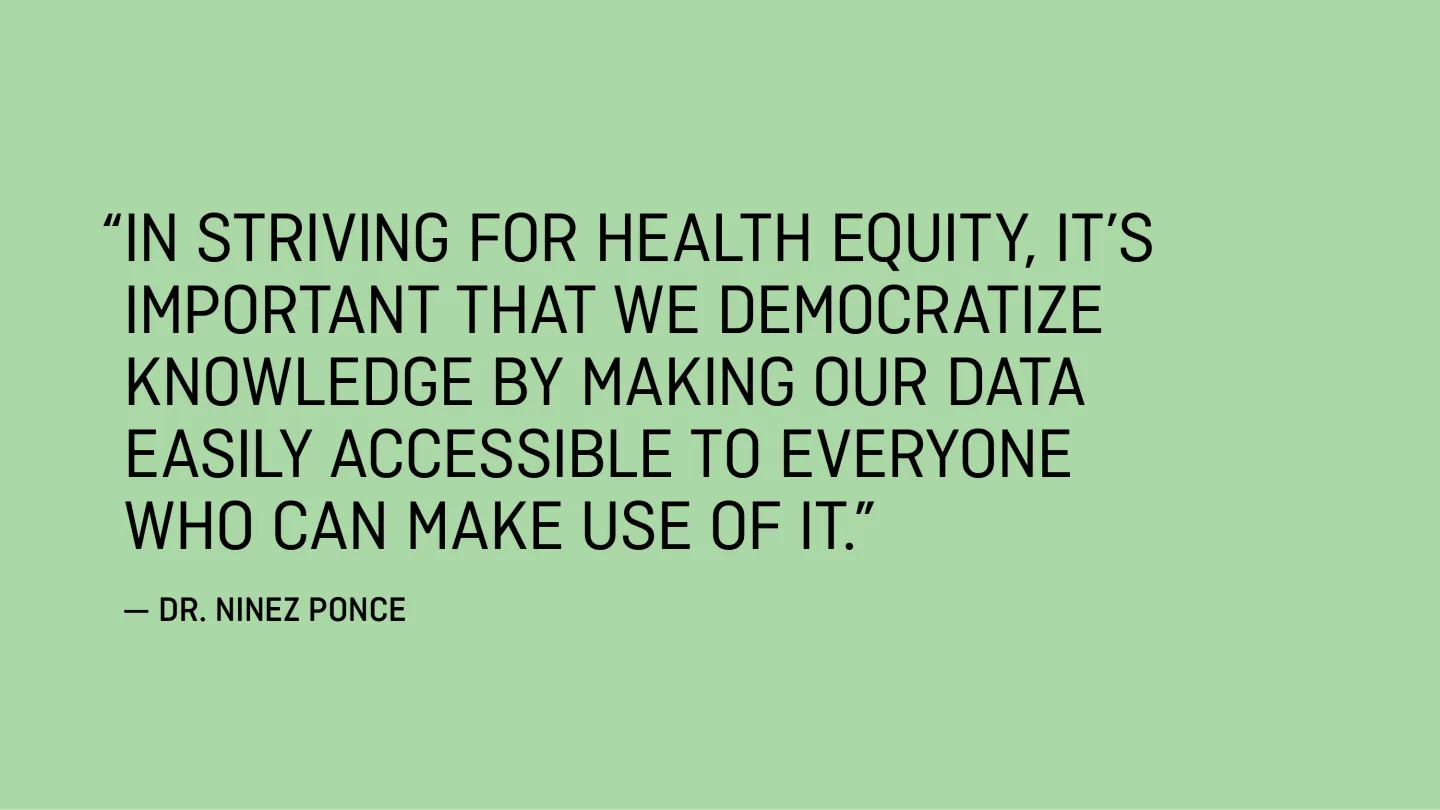
NP: That work was huge, and it speaks to Kate’s tenacity. To influence policy, of course you need excellent scholarship, which Kate has, but that kind of engagement is also essential. In making the case, good data is critical but it has to be combined with real experiences. Marrying the evidence for a policy with testimonials from the people who are affected is more powerful than either one alone. You have to recognize when there is that policy window and to fashion the evidence in a way that’s palatable to policymakers. At the Center for Health Policy Research, we issue short, digestible reports, knowing that many people aren’t going to read the peer-reviewed journal articles. And in striving for health equity, it’s also important that we democratize knowledge by making our data easily accessible to everyone who can make use of it — not just policymakers, but also community-based organizations, students, researchers, and others.
KL: This idea of democratizing data access has ripple effects for junior faculty and students, particularly those who don’t have access to a huge amount of grant funding to go out and collect their own data. People at institutions that aren’t as well resourced as UCLA use CHIS data to speak to health problems in their communities, which is so powerful.
WHAT DO YOU TRY TO INSTILL IN YOUR STUDENTS THAT WILL HELP THEM BE SUCCESSFUL, PARTICULARLY WHEN IT COMES TO POLICY ADVOCACY?
NP: I emphasize the importance of rigor. There is certainly no shortage of passion among public health students, and that’s a wonderful thing. But it’s not enough to just care about an issue or a population; you have to build the best possible evidence to move policy that addresses the inequities you’re outraged about.
KL: We encourage our students to ask not just what the effect of a policy is, but for whom. Who benefited, who was harmed. And don’t just think about the average, population-wide effects — which economists call “marginal effects” — but effects among the marginalized, as Ninez said so eloquently earlier.

Faculty Referenced in this Article