Faculty Conversation: Weighing AI's Impact on Public Health
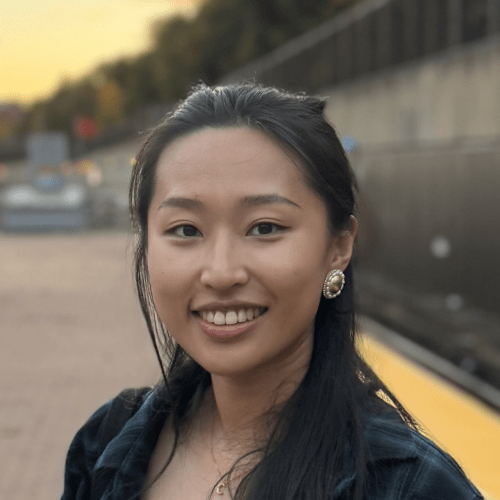
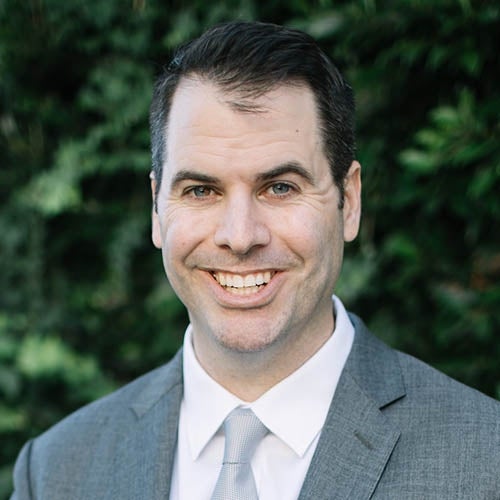
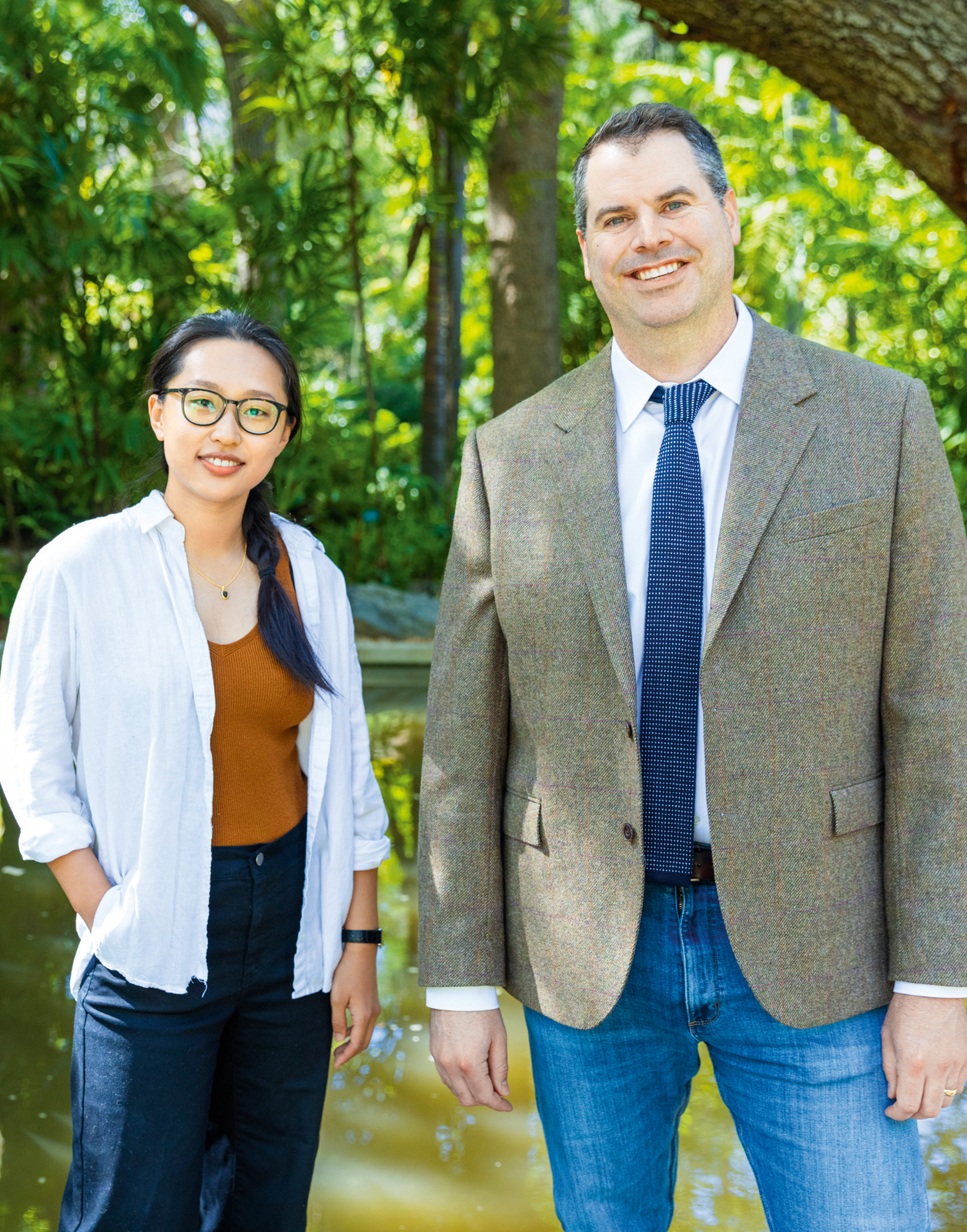
Drs. Sijia Li and Andrew Holbrook
The explosion of artificial intelligence as an everyday tool has dominated the public discourse like few other topics, fueling widespread debate over how it will transform society, for better or worse. For public health, AI offers the potential for such benefits as accelerating research, improving disease surveillance, and enhancing decision-making capabilities, but its growth also raises troubling environmental, educational, and equity concerns, among others. Given the integral role of statistics and data science in powering the AI revolution, UCLA Fielding’s Department of Biostatistics is a key player in working with not only other FSPH departments, but also outside entities in promoting the use of AI in ways that will advance public health responsibly and equitably.
Dr. Andrew Holbrook, FSPH associate professor of biostatistics, employs AI and machine learning to study spatial epidemiology and Alzheimer’s disease; he is currently part of a UCLA and Harvard team using these tools to develop models aimed at making sense of highly complex patterns of neurons in an effort to better understand the changes that occur at the earliest stages of the disease. Dr. Sijia Li, assistant professor in the department, develops statistical methods for using data from multiple sources to answer scientific questions, toward the goal of addressing some of the challenges inherent in real-world applications in clinical trials, electronic health records data, infectious disease, mental health, and health equity.
HOW HAS AI AFFECTED YOUR WORK AS BIOSTATISTICIANS?
SIJIA LI: As AI has surged, it’s made me realize that the tools I learned in my training and have built up over the years are especially relevant. In my work, I care a lot about uncertainty because, for example, in clinical trials, where healthcare decisions are made based on the output, how certain you are about your estimates matters a great deal. AI models are very complicated, with millions of parameters. And the more complicated the models, the more we should care about uncertainty, about how robust they are, and about their transportability. If I run an AI model on one population, does it perform as well on a different population? These properties of certainty, robustness, and transportability are classical statistical concepts, and we have both well-established and newly developed methodologies to tackle those concepts. So my focus has definitely shifted to AI-related problems, but the way I approach those problems stays the same — through a statistical lens.
ANDREW HOLBROOK: As Sijia was saying, our training as statisticians gives us formal tools that we can bring to bear on AI. It also goes the other way, where AI is providing us with new tools that can advance our work. I’m developing new AI methods for Alzheimer’s disease and phylogenetics in viral epidemiology. With Alzheimer’s disease, the neuroscientific data my team is working with is extremely high-dimensional. When I was first learning about statistics, a typical dataset might have 10 descriptors, or what we call predictor variables. With this neuroscience data, it’s 10,000, and it changes over time. AI is very good at generating scientific insight from that complicated data. So, because data these days tends to be extremely dynamic and high-dimensional, that’s one way in which many statisticians are using AI. But unlike AI engineers, who seek to create a product that applies to many datasets, we think about the underlying structures of the actual dataset we’re investigating. In that sense, when a statistician uses AI as a tool for analyzing difficult datasets, we are actually increasing AI’s scope.
WHAT IS AI’S POTENTIAL FOR ADVANCING PUBLIC HEALTH OVERALL, AND WHAT CONCERNS DO YOU HAVE, IF ANY?
SL: One thing I’m really excited to see is how AI can help foster adaptive policymaking, guiding optimal intervention strategies. As an example, when disasters like the California wildfires occur, as statisticians, we estimate the health and social outcomes of a population. But how do we better prepare for the next one? How do we allocate resources in an optimal way? We can use real-time AI models to help us get the information we need to react faster.
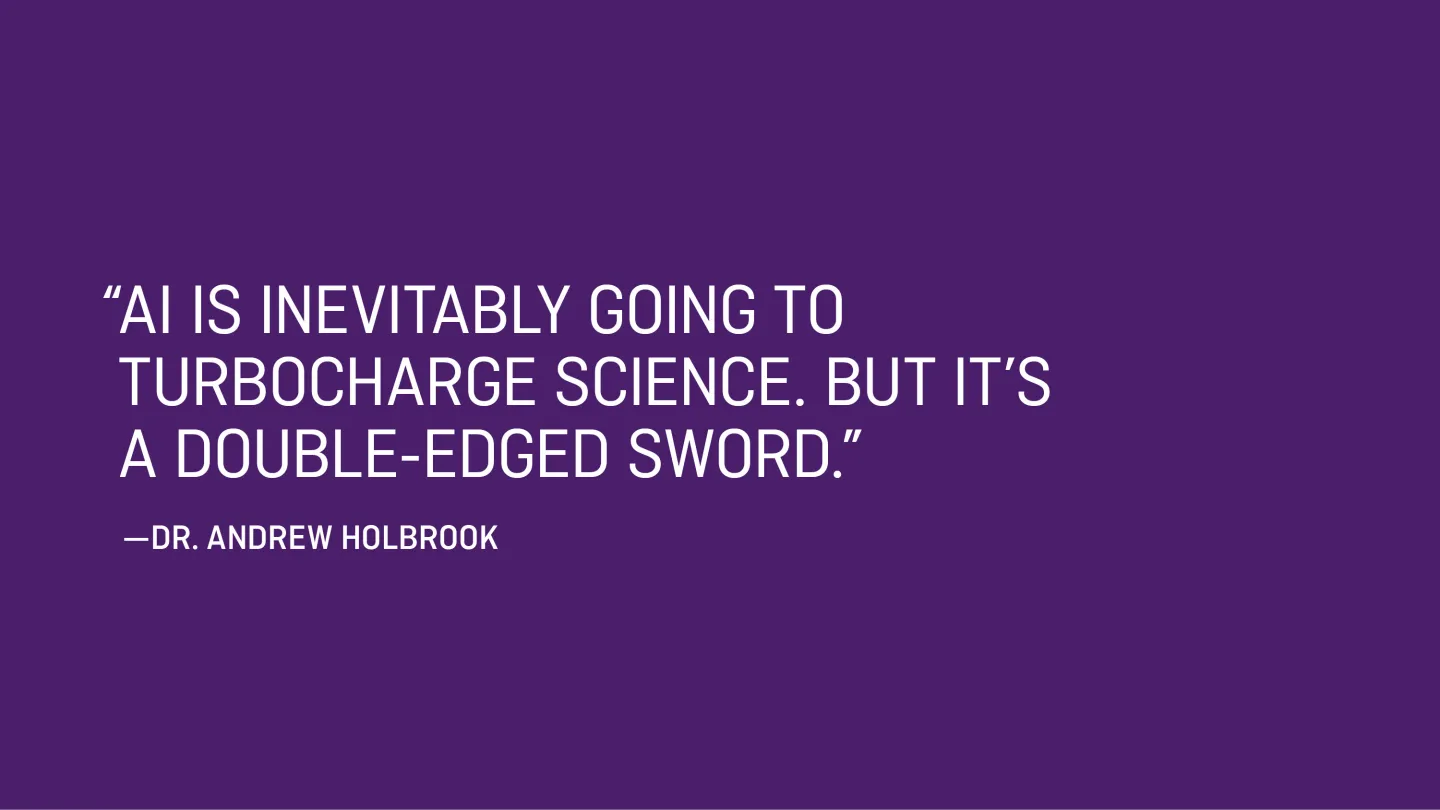
AH: AI is inevitably going to turbocharge science. The rate at which we’ve been advancing technologically is going to increase immensely. But it’s a double-edged sword. An integral part of public health is the economic well-being for individuals and families, and we see AI causing major disruptions in industry. So, whereas I’m optimistic in terms of the science, I am more pessimistic about the effects of AI on the general economy and I worry that, with shortsighted decisions by our leaders, the generation now entering the workforce isn’t going to have the same opportunities as my generation. We already have immense income inequality, which is a public health problem, and I see the potential for AI making that worse.
SL: It’s definitely a double-edged sword as it relates to public health. AI can help us solve complex public health problems, but the data centers and the energy being consumed create new burdens on our environment, so to some extent using AI to develop policy becomes a cost/benefit calculation.
Another concern I have with the overuse of AI tools is that, if people rely on the same system for so many things, will our thoughts start to converge? In public health, as in so many other fields, we benefit from diverse ways of thinking. Beyond that, AI models rely on a set of training data. The population underlying that training dataset is not typically going to be an underrepresented or marginalized group.
WHAT DO YOU SEE AS THE PROS AND CONS FOR EDUCATION, BOTH AT THE K-12 LEVEL AND FOR PUBLIC HEALTH STUDENTS?
AH: A major part of education is training in skills that give us the ability to make a living. AI can help quite a lot there, because it’s about establishing workflows to more efficiently conduct science or accomplish the things that we want to do. But there’s also education to benefit the soul, the human psyche, and that’s the part I see being threatened by AI. If you’re overly reliant on AI, you’re missing out on all the edifying parts of education that build you up as a person.
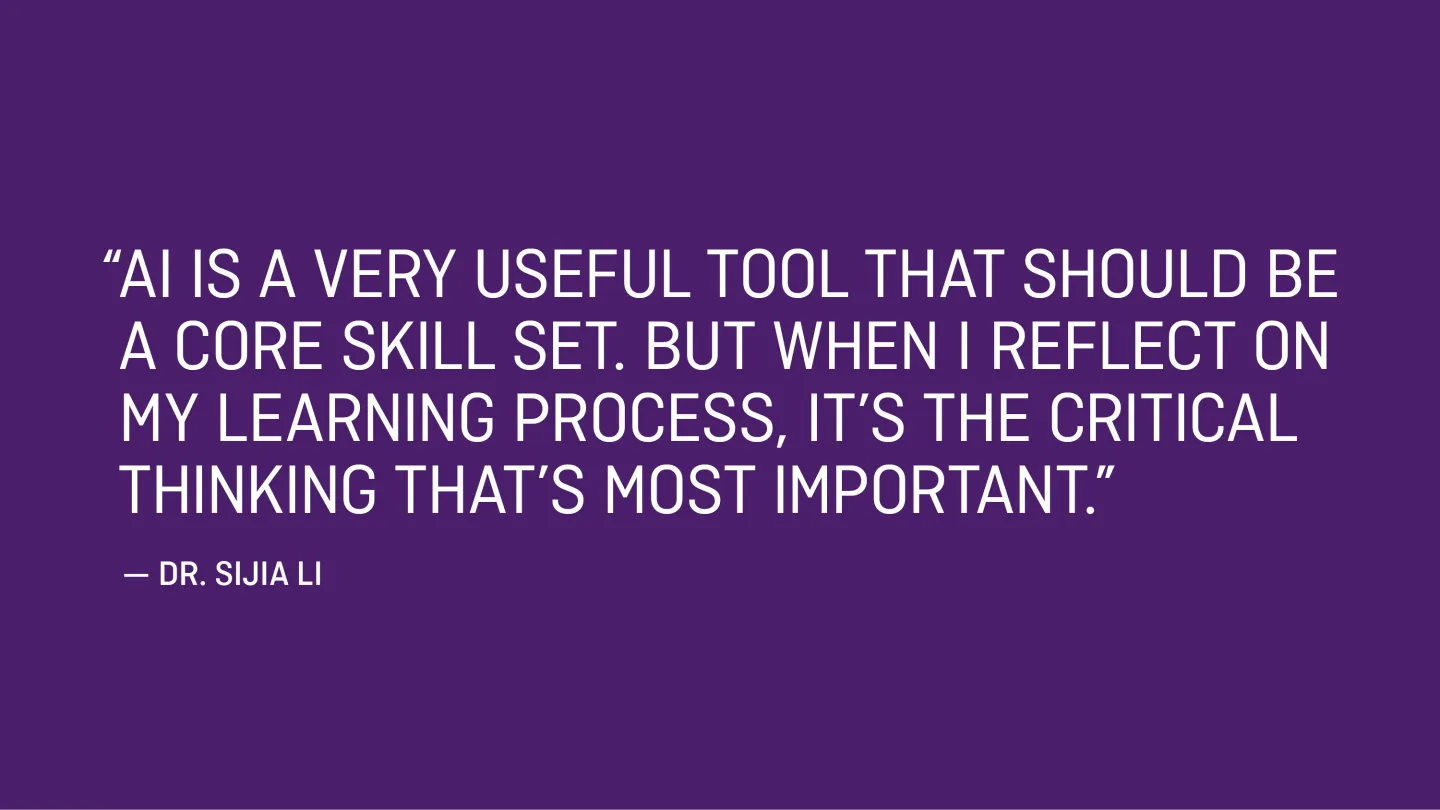
SL: AI is a very useful tool that should be a core skill set. But when I reflect on my learning process, it’s the critical thinking that’s most important. My fear is that people are losing the habit of checking how knowledge is derived and where it’s coming from.
WHAT AI-RELATED SKILLS DO YOU EXPECT ALL FSPH GRADUATES WILL NEED TO THRIVE IN THE PUBLIC HEALTH WORKPLACE OF THE FUTURE? AND SPECIFICALLY FOR GRADUATES OF YOUR DEPARTMENT, WHAT ARE THE SKILLS THEY WILL NEED TO SUCCEED?
SL: For public health students, these AI platforms provide a chance to practice summarizing their problem. For biostatisticians, that means formalizing a scientific problem into a statistical problem. AI tools also give students an opportunity to polish their presentation skills. And for anyone in the public health field, the ability to formalize a problem and explain it clearly to a broader audience is important.
AH: As biostatisticians, we have certain methods, concepts, tools, and ways of thinking that are useful whether you’re in industry, public health, government, or doing academic research. I would contend that you don’t know how to use AI effectively if you don’t know how to do things yourself as well. I see classic statistical tools and AI tools as complementary. Both must be taught for students to fully leverage the tools we’re giving them.
Faculty Referenced in this Article