In memoriam: Dr. Ronald Andersen
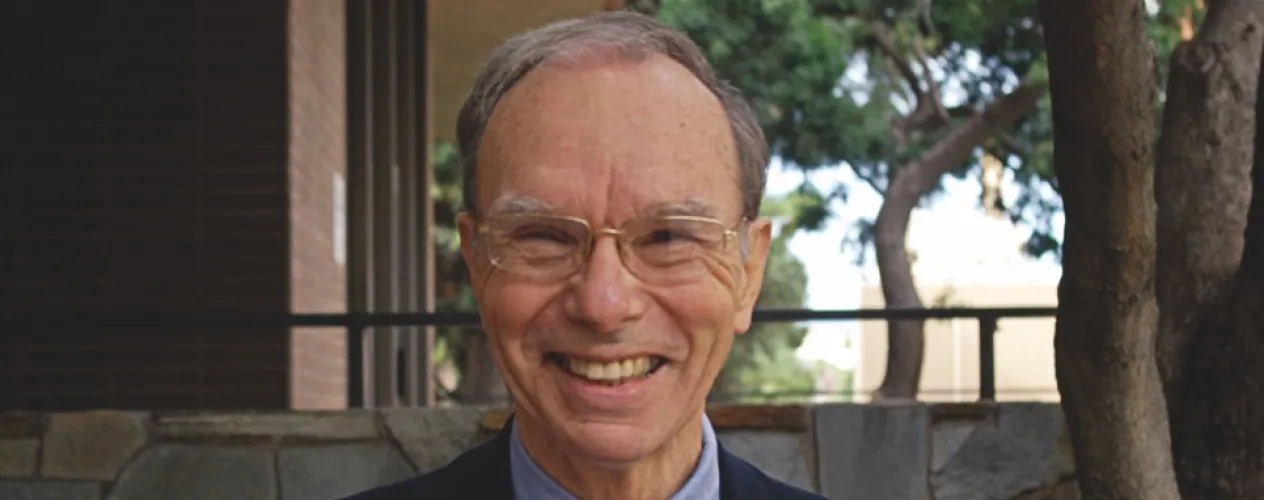
Dr. Ron Andersen, Wasserman Professor Emeritus in the UCLA Fielding School of Public Health’s (FSPH) Department of Health Policy and Management and a beloved member of the FSPH community for the last 35 years, passed away September 14, 2026.
Andersen was a giant in the field of health services research, recognized by scholars and policymakers around the world for what came to be known as the Andersen Model — a framework for understanding and improving access to healthcare services. Refined and extended multiple times by Andersen and his colleagues over the years, the model continues to be widely used nearly 60 years after it was initially introduced. At UCLA Fielding, Andersen is equally revered as a treasured colleague, teacher, mentor, and friend to many, whose kind spirit and impact will continue to be felt and remembered for years to come.
Over the course of a career spanning more than six decades, Andersen was a leader in establishing evidence of what is now taken for granted — that the gap between who receives needed healthcare and who doesn’t can be understood only by taking into account social, environmental, and other contextual factors. In addition to his seminal model for assessing health-services utilization, Andersen published important research on topics ranging from healthcare for older Americans and medical education to physician organizations and international comparisons of health systems. Beyond his pivotal theoretical work, he directed three national surveys of access to medical care and evaluated numerous programs designed to improve access.
Andersen received his BS in Sociology from the University of Santa Clara and then went on to graduate studies at Purdue University, where he earned his MS and PhD degrees in Sociology. In 1968, the year he received his PhD, he published A Behavioral Model of Families’ Use of Health Services, which laid the foundation for what became the Andersen Behavioral Model of Health Services Use, or simply the Andersen Model. In explaining how and why individuals use health services, the model outlined three key determinants: predisposing characteristics, including demographics and beliefs; enabling resources, such as income, insurance, and other factors influencing access; and perceived or clinically determined need. Simply put, the Andersen Model showed that healthcare utilization is driven not just by illness, but also by an individual’s health knowledge, beliefs, and behaviors; circumstances; available resources; and ability to obtain services.
As groundbreaking as the Andersen Model was at the time, what’s even more remarkable is its enduring influence. It has continued to be revised, adapted, and applied to various populations by researchers everywhere — including at UCLA Fielding, across the U.S., and around the world. It has been used for research involving low-income populations, racial and ethnic minority populations, women, children, older adults, people experiencing homelessness, people living with HIV, and oral health, to name a few.
After earning his PhD, Andersen spent more than two decades on the faculty at the University of Chicago, where he rose to professor in the Graduate School of Business and Department of Sociology, director of the Center for Health Administration Studies, and director of the Graduate Program in Health Administration. While there, he built on his previous work in an important research collaboration with Dr. Lu Ann Aday that led to influential publications on equity and access in the U.S. healthcare system.
Andersen joined the UCLA FSPH faculty in 1991 as Wasserman Professor in the school’s Department of Health Policy and Management (then called the Department of Health Services), which he chaired from 1993 to 1996, and again from 2000 to 2003. He also held an appointment in the campus’ Department of Sociology. While at UCLA Fielding, his stature only grew as he collaborated with colleagues to expand on the Andersen Model in ways that incorporated contextual and community determinants of access.
With Dr. Pamela Davidson, who continues to serve as a faculty member in FSPH’s Department of Health Policy and Management, Andersen extended the model from general healthcare utilization into oral health and across low-income and culturally diverse populations, including as part of the World Health Organization’s International Collaborative Study of Oral Health Outcomes (ICS-II). Working with Dr. Lillian Gelberg, a professor in both UCLA Fielding and the David Geffen School of Medicine at UCLA, he conducted a series of studies on access among populations experiencing homeless and other vulnerable groups, developing the Gelberg-Andersen Behavioral Model for Vulnerable Populations.
“Ron Andersen’s contributions to health policy and management extend far beyond his groundbreaking research on access to healthcare,” said Dr. Ninez Ponce, professor and chair of FSPH’s Department of Health Policy and Management. “Through Changing the U.S. Health Care System, Ron, together with Tom Rice and Jerry Kominski, helped establish a foundational text that brought the major issues of health policy and management together for a new generation of students and scholars.”
Andersen’s career scholarship included more than two dozen books and edited volumes, along with nearly 250 peer-reviewed articles. He was elected to the Institute of Medicine (now the National Academy of Medicine) in 1984 and held leadership positions in professional organizations that included the Association for Health Services Research (now AcademyHealth) and the American Sociological Association. Among his many honors, he received the Leo G. Reeder Award for Distinguished Service to Medical Sociology, the Distinguished Investigator Award from AcademyHealth, and the Baxter Allegiance Foundation’s Health Services Research Prize.
For all of his scholarly achievements, Andersen took special pride in his role as a teacher and mentor. He influenced hundreds of UCLA Fielding students through the courses he taught and the programs he led, and supervised the dissertations of approximately 50 doctoral students. But his impact went even further, as students and researchers all over the nation and the world would reach out to learn more about the model and adapt it to their research area. Andersen was always willing and enthusiastic to guide their research.
“Ron Andersen will be sorely missed,” said Dr. Kari Nadeau, dean of the UCLA Fielding School of Public Health, “but his legacy endures not only in the continued widespread use of the Andersen Model, which has provided a common language for numerous studies asking who is getting the care they need, but also in the ongoing impact of so many of his former students and colleagues in conducting that research and shaping policies designed to improve healthcare access for all.”
Andersen is survived by his wife of nearly 60 years, Diane; their daughter Rachel and her husband Scott Greenberg; and grandchildren Bailey and Peyton.
Remembering Dr. Andersen
- A History of Impact: 1960s - 1980s - Dr. Ronald Andersen
- Among the most highly cited in the field from 1960 to 2020, as published in PLOS Biology - Dr. Ronald Andersen
- An Interview with Ronald Andersen, PhD (as published in Medical Care, 2008)
- Ronald Andersen, Wasserman Professor Emeritus, UCLA College, Social Sciences, Sociology