Thomas Sills (MPH ’23) uses his UCLA Fielding education to ensure Native voices are heard
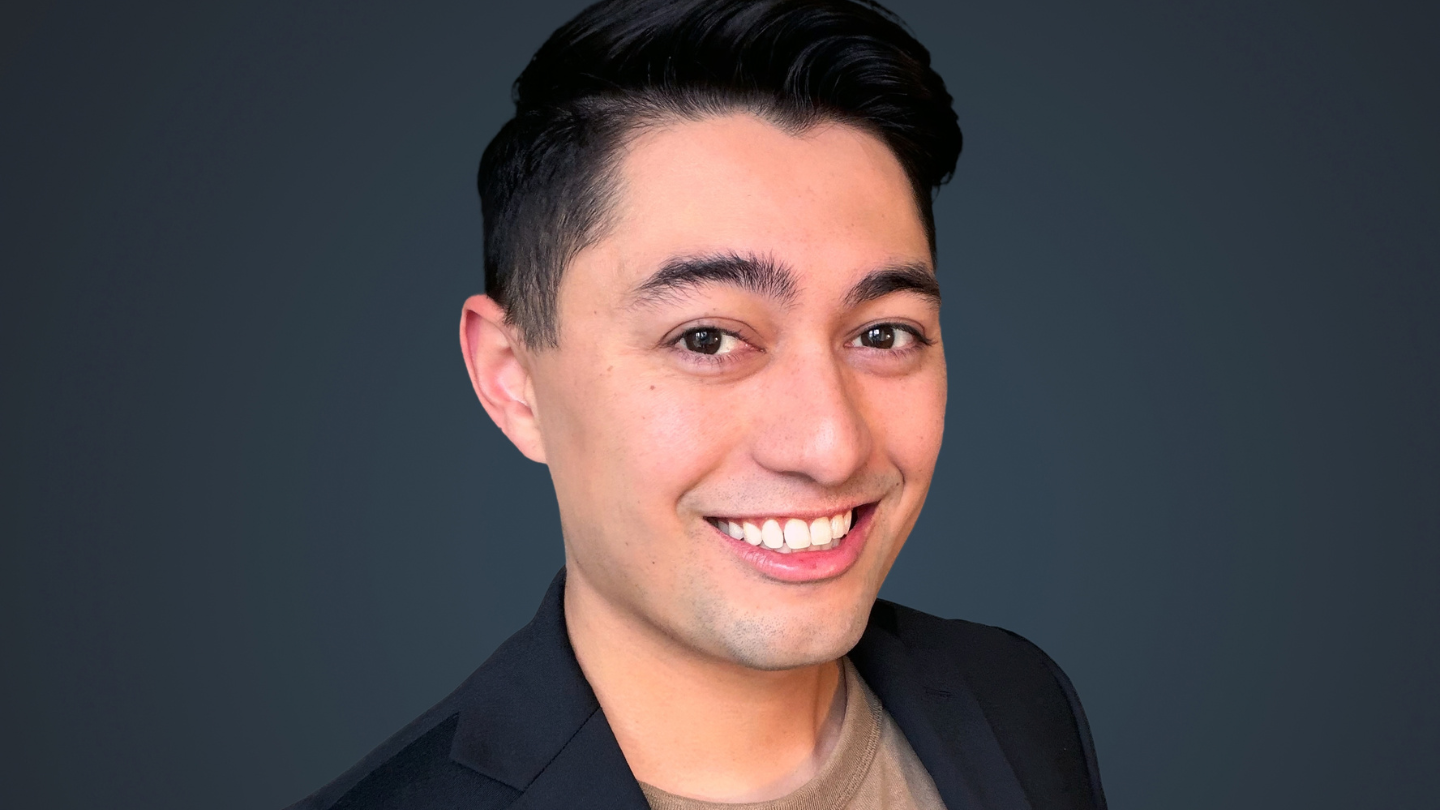
Growing up on the Bishop Paiute Reservation at the base of California’s Eastern Sierra Nevada Mountains, Thomas Sills (MPH ’23) witnessed firsthand the health inequities besetting many Native American communities, including his own. With the benefit of his UCLA Fielding School of Public Health education, Sills has both a deeper understanding of the social and structural issues confronting Native populations and the skills to address them.
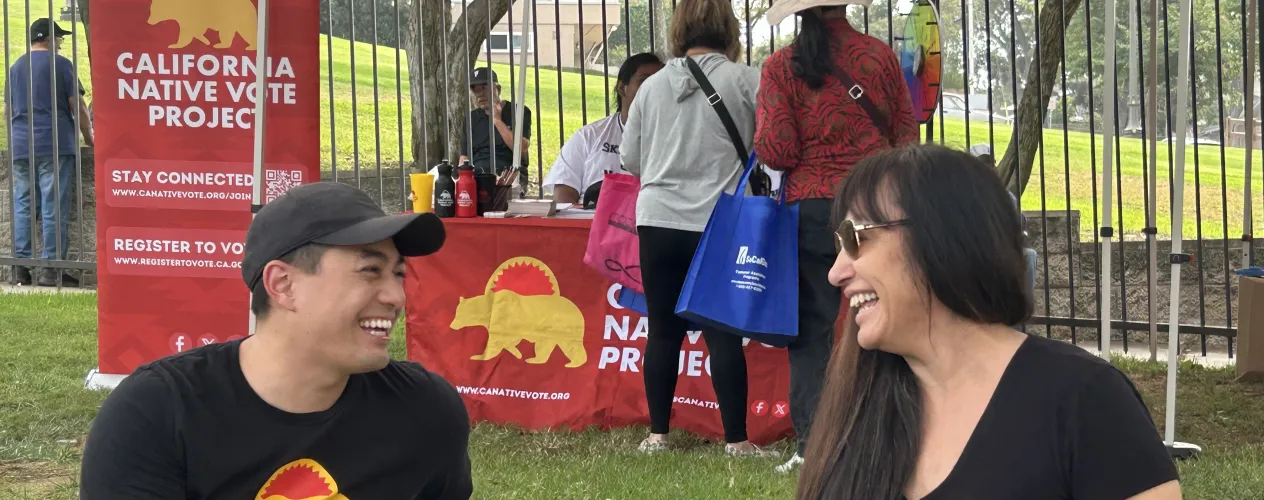
Sills is senior project manager for the California Native Vote Project (CNVP), which seeks to promote healthy, powerful, and culturally thriving Native communities through an integrated voter engagement strategy, along with year-round community organizing that includes on-the-ground education and mobilization around issues of importance to California’s Native American and Indigenous populations.
“At CNVP, we’re trying to encourage our communities to use voting and other political tools to make our voices heard and build power so that we can address upstream factors that ultimately improve our health and well-being,” Sills explains.
In his role, Sills has supported projects such as We the Resilient: Stories and Data from American Indians/Alaska Natives in California, CNVP’s seminal report, which recently published its second volume. Based on first-of-its-kind research, the report highlights public health and related outcomes for the state’s Native population while featuring stories that illustrate the real-world impact behind the data.
In addition to his CNVP work, Sills is a consultant for health and human services nonprofits serving Southern California’s large Native community. His clients include the So’oh-Shinálí Sister Project, an organization founded and led by three Native women to provide culturally resonant, values-aligned wellness and education services for indigenous community members in L.A. County; and Sacred Path Indigenous Wellness Center, which serves urban Native communities in Los Angeles and Orange counties through behavioral health services.
Sills has fond memories of his childhood on the Bishop Paiute Reservation, an 875-acre sovereign tribal land with a population of more than 1,400. Located on the western edge of Bishop in California’s Owens Valley, the ancestral territory is known locally as Payahüünadü (land of flowing water). “It was so beautiful to grow up on the rez, being in nature and seeing these spectacular mountain ranges,” Sills recalls.
He credits his family with protecting him from the many public health risk factors on the reservation, including the high rate of substance abuse. “It’s a huge issue in Indian country, and I could see the impact,” Sills says. “But my mom always made sure I had creative outlets and remained grounded in the culture, tradition, and ceremony.” By the time he graduated from high school, Sills was awarded a prestigious Gates Millennium Scholarship, which covered his entire undergraduate and graduate education.
As a UCLA undergraduate, Sills had a pivotal summer experience with the CDC/John R. Lewis Undergraduate Public Health Scholars Program at UCLA Fielding, which provides undergraduate students and recent college graduates from across the country the opportunity to explore the field of public health through hands-on training, structured workshops, group events, leadership, and professional development. “It was eye-opening,” Sills recalls. “We had faculty presenting, and I learned that public health is much broader than what happens in a doctor’s office.”
The experience led Sills to apply to UCLA Fielding’s MPH program in the Department of Health Policy and Management. At FSPH, Sills started to view challenges facing Native populations through a public health lens. “I began connecting the disparate outcomes for my community with the kind of healthcare that was often disconnected from the community being served,” he says. “I saw how the COVID pandemic disproportionately affected Natives — both through poorer outcomes associated with being under-resourced, and because losing even a small number of people from a tribal community can mean so much when they are the spiritual leaders and the keepers of knowledge, language, songs, and traditions.”
Throughout his MPH education, Sills could see that what he was learning in the classroom directly applied to the work he was doing. “I had amazing professors who were from the professional world and combined practical education with academics, which allowed me to take concepts I was learning and implement them at my job,” he says. “My MPH has given me the tools and language to systematically approach issues of importance to Natives. It’s extremely rewarding to be able to use that knowledge to help the organizations I’m involved with get to a place where they have the infrastructure to deliver on their mission.”