UCLA Fielding researcher co-authors study that suggests new federal and state policies could lead up to 1 million Latino Medi-Cal enrollees to disenroll in California
Analysis co-authored by UCLA Fielding's Dr. Arturo Vargas Bustamante found multiple paths to losing health coverage and food assistance.
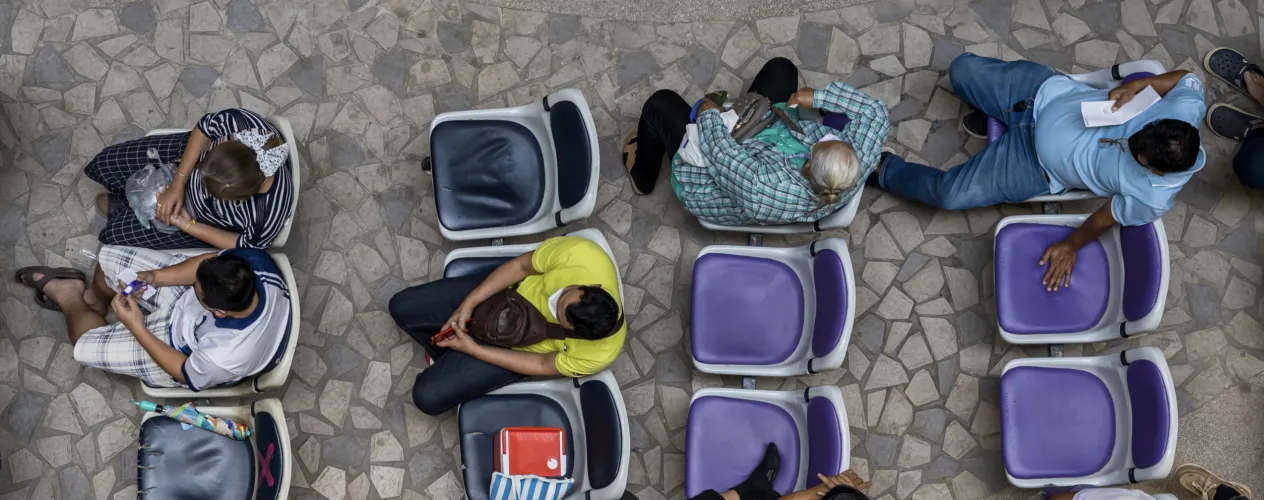
A new report co-authored by a UCLA Fielding School of Public Health researcher has found as many as 1 million Latino Californians may withdrew from Medi-Cal because of changes in federal and state regulations.
These could include as many as 380,000 children who are U.S. citizens, researchers said.
“Eligibility rules may apply to individuals, but the consequences extend across entire households,” said Dr. Arturo Vargas Bustamante, professor in the UCLA Fielding Department of Health Policy and Management and co-author of the brief. “When fear or confusion causes a parent to avoid renewing benefits, children can lose access to health coverage or food assistance even when they are U.S. citizens and remain eligible. That is why it is important to examine not only who is directly affected by a policy, but how its effects spread through families.”
The report was released Sept. 29 by the UCLA Latino Policy and Politics Institute (LPPI), where Vargas Bustamante serves as faculty research director. The brief explores the challenges faced by low-income California families enrolled in Medi-Cal and CalFresh as they navigate changes in eligibility and new immigration policies.
“Families are not confronting these policy changes one at a time,” said Rosario Majano, a UCLA Fielding alum (MS, ’20) and research analyst at LPPI who co-authored the brief. “For example, a parent may remain eligible for a program but face new work and reporting requirements. “At the same time, they may worry that using benefits could carry immigration consequences. This new policy environment makes it much harder for families to understand whether they remain eligible and safe to access the assistance they need.”
Under the brief’s potential “chilling-effect” scenarios, researchers found that as many as 1 million Latino Medi-Cal enrollees could disenroll due to immigration related fears. Similarly, fear and confusion regarding public charge could potentially affect up to 517,000 Latinos living in households receiving CalFresh. The analysis separately finds that hundreds of thousands of Latinos may be at risk of losing access to social safety net programs under new community engagement and reporting requirements for public programs.
The researchers examined how changes under H.R. 1, the Department of Homeland Security’s new public charge rule, and California’s restrictions on Medi-Cal enrollment could affect enrollment in public programs for Latino families across the state. Together, these policies create three overlapping pathways to benefit loss: direct exclusion under new rules, procedural loss due to reporting or renewal requirements, or withdrawal from programs due to fear of potential immigration consequences.
This brief presents estimates for potential disenrollment and loss of benefits for Medi-Cal and CalFresh beneficiaries under new immigration policies and H.R. 1:
- H.R. 1 and Community Engagement Requirements:
- About 30% of Latino adults who are potentially subject to new requirements may be at risk of losing Medi-Cal coverage because they do not work at least 80 hours a month and are not enrolled in school.
- More than 1 in 3 Latino adults living in CalFresh households who are potentially subject to work requirements may be at risk of losing benefits because they do not meet the 80-hour-per-month work threshold.
- Public Charge may result in chilling effects on enrollees living in households with at least one noncitizen member:
- Between 350,000 and 1 million Latino Medi-Cal enrollees living in households with at least one noncitizen could disenroll due to public charge.
- Similarly, between 172,000 and 517,000 Latinos living in households receiving CalFresh could be affected by loss of food assistance under the same chilling-effect scenarios.
- Chilling effects can extend to other members of immigrant families, including citizen children. Under chilling-effect scenarios:
- Between 127,000 and 380,000 Latino U.S.-citizen children could lose Medi-Cal benefits.
- Between 58,000 and 175,000 Latino U.S.-citizen children living in households receiving CalFresh could be affected by loss of food assistance.
The estimates associated with work requirements do not capture all qualifying activities or exemptions and, therefore, should not be interpreted as estimates of the number of people who will ultimately lose benefits. Other qualifying activities include community service and work programs. Key exemptions of this requirement include pregnant persons, persons with disabilities, and caregivers. Loss of assistance will depend not only on whether a person meets a requirement, but also on whether their activity or exemption is documented and verified on time. Many individuals may be discouraged from reenrolling due to the red tape associated with new eligibility rules and verification requirements even if they remain eligible to reenroll.
These overlapping policies create multiple routes for potential disenrollment and benefit loss among families who rely disproportionately on public programs: individuals may withdraw from fear of immigration-related consequences and lose assistance due to new eligibility, reporting, and renewal hurdles.
Read the full brief here.