UCLA Fielding’s Dr. Matthew Mimiaga and Dr. Roxana Rezai receive UCLA Global Education Award
The award will support their work creating a new course to examine the global impact of HIV in Africa, Asia, and South America.
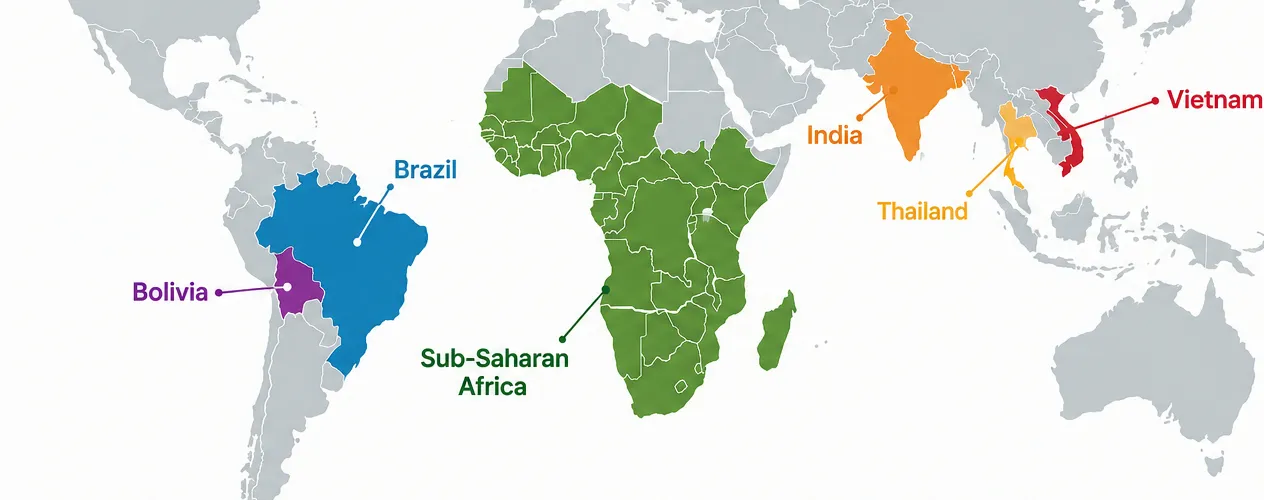
Two UCLA Fielding School of Public Health educators have received a UCLA Global Education Award to support their work expanding instruction on global health initiatives, including the impact of HIV in Africa, Asia, and Latin America.
The award goes to Dr. Matthew Mimiaga, professor in the Department of Epidemiology, and Dr. Roxana Rezai, a lecturer and postdoctoral fellow in infectious disease epidemiology, who have organized a new course in HIV epidemiology focused on global HIV and evidence-based action for undergraduates at UCLA Fielding.
"Dr. Rezai and I are co-instructing this course to examine HIV through the lived experiences and expertise of researchers, providers, and community members from high-burden regions, including Latin America, Africa, and Asia," said Mimiaga, also director of the UCLA Center for LGBTQ+ Advocacy, Research & Health (C-LARAH). "Students will engage with international experts, analyze local case studies, and participate in discussions emphasizing community-driven knowledge and culturally responsive public health practices."
In 2023, UCLA identified expanding its global reach as one of five strategic goals, and the grant for Mimiaga and Rezai is one of 17 awarded across the university for 2026. These include six Global Research Awards, which vary between $15,000 and $50,000, while another 11 Global Education Awards for Internationalizing Curriculum were also announced. Those awards ranged from $3,000 to $10,000.
“I’m incredibly grateful to receive this award with Dr. Mimiaga to help bring global perspectives into the classroom; the epidemiology of HIV is about more than understanding patterns of disease—it also requires understanding the social, cultural, and healthcare contexts that shape people’s experiences and access to prevention and treatment services,” Rezai said. “We believe that through this course, students will learn from various researchers, providers, and communities around the world and see how evidence can inform public health action that responds to local healthcare needs.”