UCLA researchers lead studies of homelessness in U.S., including impact of climate change and lessons learned from the 2025 Los Angeles County wildfires
Four recent studies, led by UCLA Fielding's Dr. Kathryn Leifheit and Dr. Randall Kuhn, highlight the role of climate change in homelessness.
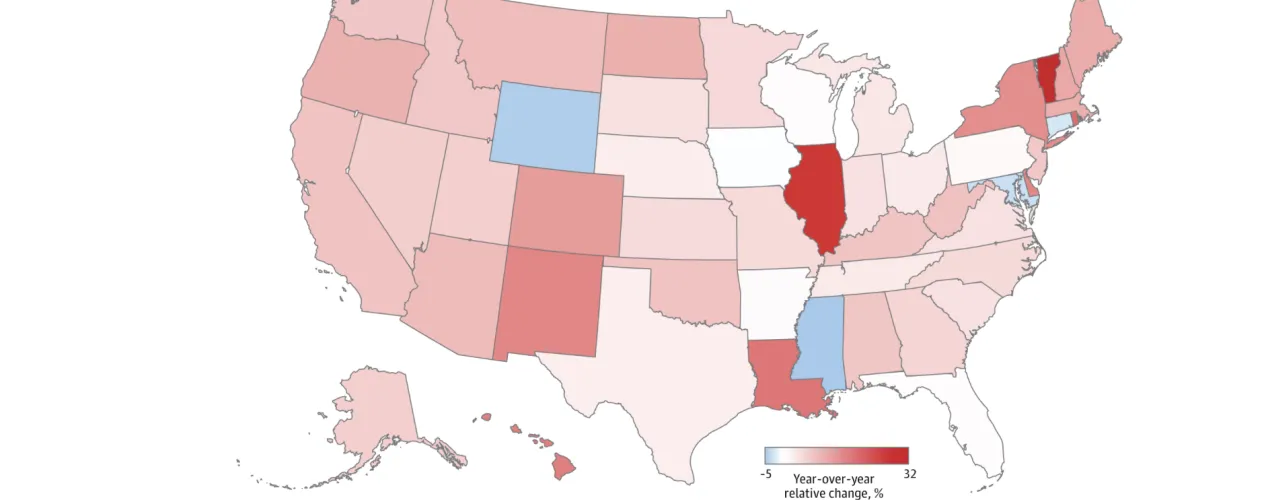
Four recently published studies led by UCLA Fielding researchers highlight the role of climate change and displacement on homeless populations across the United States, and that risks to both those who lose housing because of disasters and those already living without shelter should be the focus of recovery planning.
“Each home lost to climate-related events, per 10,000 people, was associated with a significant, 1 percentage point greater increase in homelessness,” said Dr. Kathryn Leifheit, assistant professor in the UCLA Fielding School’s Department of Health Policy and Management and a lead author of the national study, which researched factors contributing to homelessness in all 50 U.S. states and the District of Columbia. “Our findings underscore the reality that homelessness can be seen as a predictable consequence of climate disasters, so governments should focus on housing stabilization in their disaster response plans, while dedicating adequate funding to provide housing-specific services.”
In other research, authors found that in the case of the 2025 Los Angeles County wildfires, along with some 200,000 people who lost their homes in the blazes, more than three-quarters of those already experiencing homelessness in the same communities reported injuries or other significant disruption to their lives due to the fires. The County is currently home to the largest unsheltered population in the U.S., with more than 52,000 people living on the streets or in vehicles on any given night, researchers said.
“The wildfires were among the most devastating urban wildfires in history, and as traumatic as they have been for those who lost their homes, those living on the street suffered as well,” said Dr. Randall Kuhn, professor in the UCLA Fielding Department of Community Health Sciences and a co-author of three of the studies. “These findings, and the realities that climate change is very likely to lead to even more of these sorts of disasters, highlights the need for even more coordination between emergency response systems and homeless services, to ensure that everyone is adequately protected during future disasters.”
The studies, all peer-reviewed work whose authors include researchers affiliated with UCLA and the University of Southern California or Johns Hopkins University, are:
- “Impact of the January 2025 Los Angeles Firestorm on People Experiencing Homelessness,” published in the April edition of the American Journal of Public Health;
- “Factors associated with rising homelessness within U.S. States, 2019 to 2024,” published in the April edition of the Journal of the American Medical Association (JAMA Network Open);
- “What are the true medical concerns facing unsheltered homeless adults?,” published in the March edition of Health Affairs Scholar;
- “Criminalizing homelessness: Longitudinal associations of police encounters and homeless sweeps with psychosocial health among the unhoused community in Los Angeles,” published in the March edition of Social Science & Medicine.
Along with the scope and scale of the impact of climate change, the national study also suggests that interventions to prevent evictions and promote housing stability are important tools in any effort to prevent surges in homelessness.
“As an example, in the average state, homelessness rose by 11% from 2020 to 2022,” said Dr. Craig Pollack, a physician and professor in the Johns Hopkins Bloomberg School of Public Health who, with Leifheit, co-authored the national study published in JAMA Network Open. “If states and local governments had allowed evictions to proceed during that period, we estimate that that the average increase would have been nearly 20%.”
Further underscoring the importance of housing stability, one of the studies – published in the March edition of Social Science & Medicine, which focused on various attempts to address homelessness in Los Angeles before the wildfires – found that laws targeting behavior associated with homelessness, including sleeping or camping in public spaces, are associated with poorer physical and psychological health of the individuals involved.
“The big takeaway is that roughly one-third of those we surveyed face a sweep every month, and almost half are displaced every month, which in turn causes more distress, by separating them from their social connections, and cutting them off from services,” said Dr. Benjamin Henwood, a researcher at the at the USC Suzanne Dworak-Peck School of Social Work and a co-author of the study. “Policing doesn't work. The physical and mental health damage is both immediate and cumulative, and in many cases, just moves the individual from one spot to another – it doesn’t really solve the problem.”
The research published in Health Affairs Scholar found that housing and health care are complementary components of care for those experiencing homelessness, and support integrating field-based medical services with permanent housing investments, said Kuhn, who also led that study.
“Overall, these findings make clear the correlation of climate change, natural disasters, and homelessness, and the reality that communities across the U.S., and globally, can expect to see these problems arise, again and again in the future,” Kuhn said. “But they also offer potential solutions, both in terms of immediate policy actions, and, thinking more upstream, efforts to mitigate climate change. Together, these actions will reduce the risk of homelessness, before and after disasters.”
Data Sources
The authors used records drawn from the U.S. Department of Housing and Urban Development (HUD) requirements for Point-in-Time (PIT) counts of people experiencing sheltered and unsheltered homelessness for the national study, as well as Los Angeles County-specific data, derived from the Periodic Assessment of Trajectories of Housing, Homelessness and Health Study (PATHS.
Funding
The work was supported, in part, by the authors’ institutions, as well as with funding from the National Institutes of Health (R01NR021986), Conrad N. Hilton Foundation, the Homeless Policy Research Institute, and LA Care. The funders had no role in the design and conduct of the studies.