Faculty Conversation: Fighting Cancer by Uncovering Risks and Trends
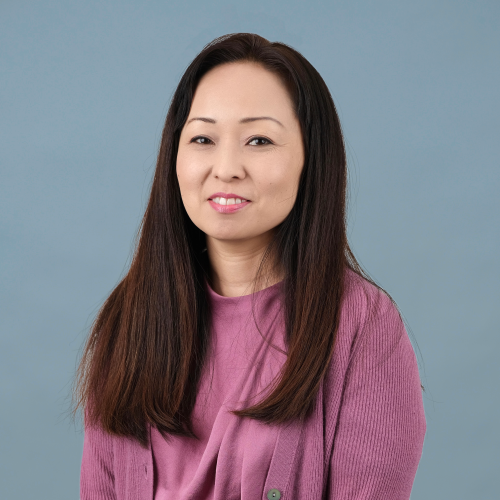
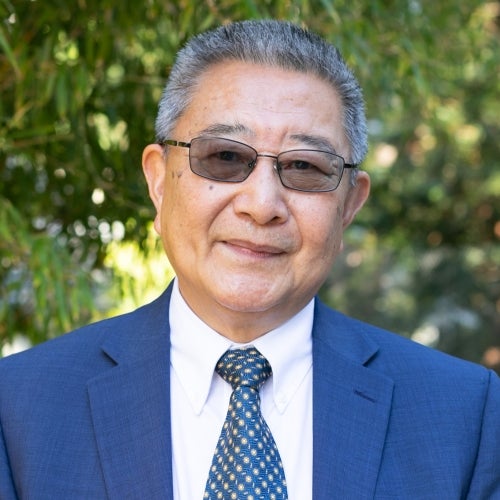
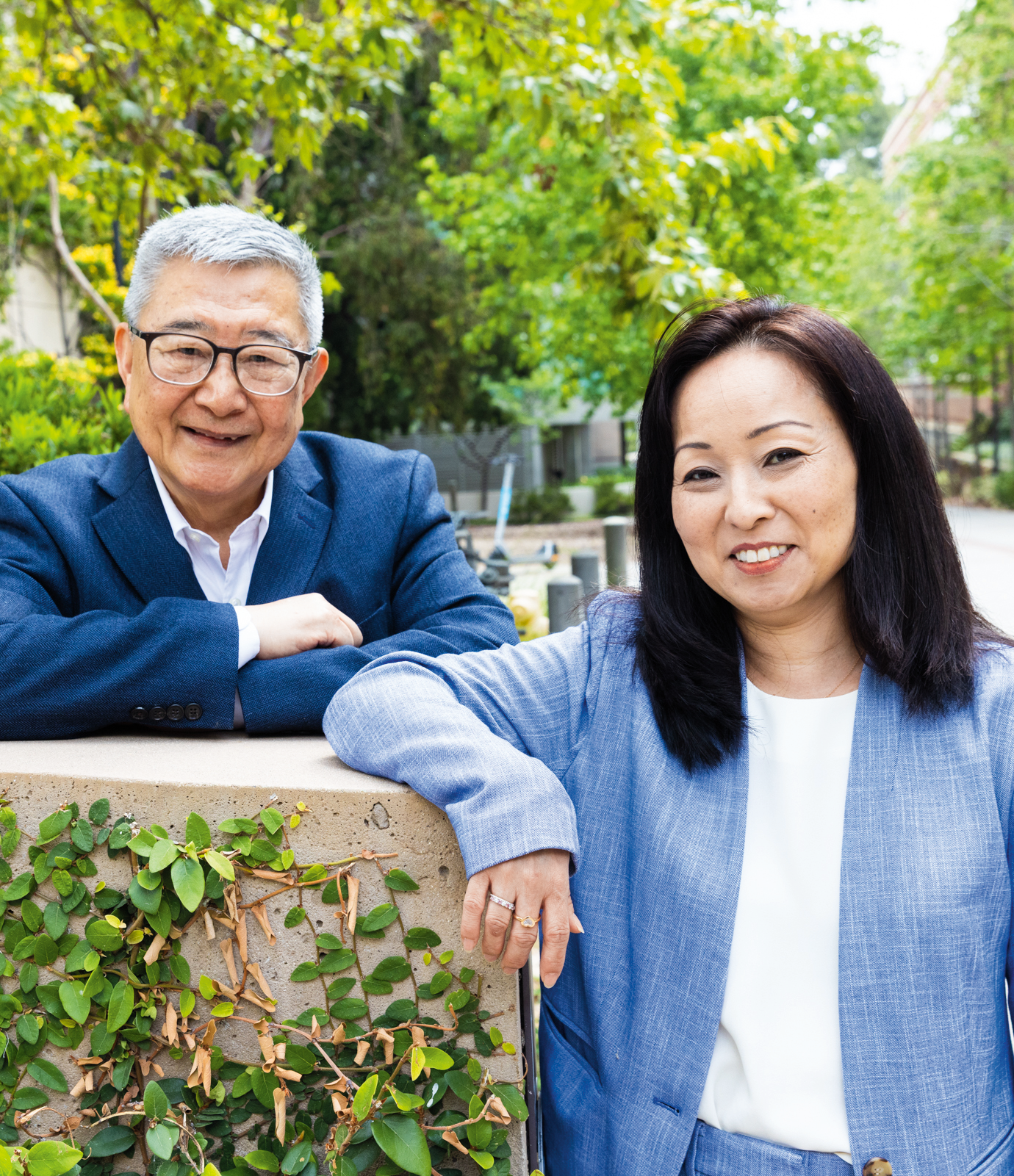
Drs. Zuo-Feng Zhang and Mia Hashibe
Driven by an aging and growing population, the number of new cancer cases is on the rise in the U.S., and as treatments for many cancers improve, the number of cancer survivors also continues to increase, their ranks now estimated to be 18.6 million. Given these trends, cancer epidemiologists are integral to public health efforts that inform policies and strategies for reducing cancer risk, improving early detection, and enhancing quality of life for survivors.
Dr. Zuo-Feng Zhang, distinguished professor and chair of UCLA Fielding’s Department of Epidemiology, is a cancer epidemiologist whose early studies involved going door to door in villages in China with some of the world’s highest rates of liver cancer among middleaged men. In the 1990s, he was among the leaders in the then-emerging field of molecular cancer epidemiology, which identifies biological markers associated with cancer risk, often through interactions with environmental and behavioral factors. Zhang then served as director of FSPH’s NCI Molecular Cancer Epidemiology Training Program for nearly three decades. Dr. Mia Hashibe (MPH ’99, PhD ’02), a professor in the department, has succeeded Zhang as the program’s director. Hashibe’s research focuses on genetic susceptibility to cancer and the long-term trajectories of cancer survivors, including the intersection of cancer treatment and long-term risk of conditions such as cardiovascular disease.
THE COVID-19 PANDEMIC AND OTHER OUTBREAKS PUT THE SPOTLIGHT ON INFECTIOUS DISEASE SURVEILLANCE AND CONTROL. COULD YOU EXPLAIN WHY EPIDEMIOLOGY FOCUSED ON CHRONIC DISEASES SUCH AS CANCER CONTINUES TO BE AS CRITICAL AS EVER?
ZUO-FENG ZHANG: For one thing, there is overlap. Approximately 10% to 12% of cancers are related to infection — from, for example, Helicobacter pylori, hepatitis B, hepatitis C, human papilloma virus, and others. The pandemic also had cancer implications: Many people with cancer died because they couldn’t access proper treatment. Many cancer screenings stopped, and as a result we are finding more advanced cancers now. But more than that, as people live longer and we have gotten better at treating infectious diseases, chronic disease accounts for three-quarters of deaths in the world. In some countries, such as the U.S. and China, it’s upwards of 88% to 90%.
MIA HASHIBE: Even with advances in treatment, we still have more than 600,000 cancer deaths per year in the United States. We’re also seeing concerning increases in young people under 50 getting cancer.
WHAT ARE EXAMPLES OF IMPORTANT CANCER INSIGHTS EPIDEMIOLOGISTS PROVIDE?
MH: In the U.S., we have these great registries that we can draw from to help uncover new trends in cancer — without those, we wouldn’t know about these higher rates in the under 50 population. Identifying these trends helps us to understand where to focus public health efforts. The other key contribution we make is to find risk factors, such as understanding how something like obesity or the consumption of ultra-processed foods contributes to cancer. There was a 2025 paper by one of the directors of a program at the National Cancer Institute estimating that between 1975 and 2020, screening and prevention efforts resulted in 4.8 million fewer deaths, whereas treatment advances accounted for 1.2 million fewer. So prevention is very important, and epidemiology is crucial to guiding those efforts.
ZZ: The biggest success, of course, is related to tobacco smoking. Once the epidemiological evidence was published and the U.S. Surgeon General’s report came out warning of the relationship with lung cancer in 1964, smoking rates started to drop. Now we know smoking is related to 13 different cancers, along with cardiovascular disease, COPD, and diabetes. It has been estimated if nobody smoked, 15% to 20% of cancer could be prevented. And tobacco cessation programs require little investment when you consider the benefits.
WHAT ARE SOME EMERGING FACTORS THAT WILL REQUIRE MORE STUDY GOING FORWARD?
MH: Obesity is a major factor in the U.S. population because of its impact on metabolic disease, which in turn affects cardiovascular disease and cancer risks. We will need to learn more about the impact of GLP-1 agonist drugs on cancer prevention and cancer survival. These drugs were originally prescribed only for diabetes; it’s only recently they are being used for weight loss in people without diabetes, and since cancers occur at least 10 years after an exposure, we’re just at the beginning of being able to study how that will affect risk. There is also growing attention on risk factors associated with microplastics and pesticides, as well as cannabis as legalization has increased its use.
ZZ: With GLP-1 drugs, as prices drop and so many more people are using them to reduce body weight — even without a prescription — there are many unknown questions that will need to be studied. A lot of obesity-related cancers may be reduced, but there could be other risks that will increase.
HOW HAVE THE TOOLS AVAILABLE TO EPIDEMIOLOGISTS ADVANCED OVER THE YEARS?
MH: The growth of electronic medical records, or EMR, has given us a powerful tool for following people over time. Much of my research uses SEER-Medicare data, which links two large population data sources to provide detailed information related to cancer among Medicare beneficiaries. Using EMR with these large databases, I can see things like whether people who develop cancer had higher blood pressure at some point, or depression at some point. We have more genetic data available, which allows us to look for disease-risk stratification. The high-risk cancer genes like BRCA1 and BRCA2 represent a huge success for cancer epidemiology. Those genes are impacting a lot more cancers than we expected, and that’s led to prevention strategies.
In the field of molecular epidemiology, the liquid biopsy, which is a noninvasive way of looking for cancer cells in the blood, saliva, or urine, is really exciting. It’s not to the point where it can be used for cancer screening, but I’m very hopeful it will be useful in detecting recurrences. There are studies showing that the liquid biopsy might identify a cancer recurrence a year earlier than imaging can.
ZZ: Another exciting emerging tool for cancer epidemiologists involves the “omics” fields — genomics, proteomics, epigenomics, and other fields that use high-throughput methods to study large sets of biological molecules to better understand how an organism works. People are using these technologies to look at certain markers and learn how they are related to exposures and cancer prognosis.
We are also seeing a merging of diseases in research. For example, Dr. Hashibe is looking at the two major causes of death — cancer and cardiovascular disease — through what’s called cardio-oncology, which is how heart disease patients get cancer and how cancer patients get heart disease. Researchers like Dr. Hashibe are starting to use AI to detect heart disease from the breast cancer screening mammograph. That’s very exciting, because it can lead to the discovery of different biological pathways, which can add new elements to our prevention and control strategies.
WHAT ROLE DO YOU FORESEE FOR AI IN CANCER EPIDEMIOLOGY?
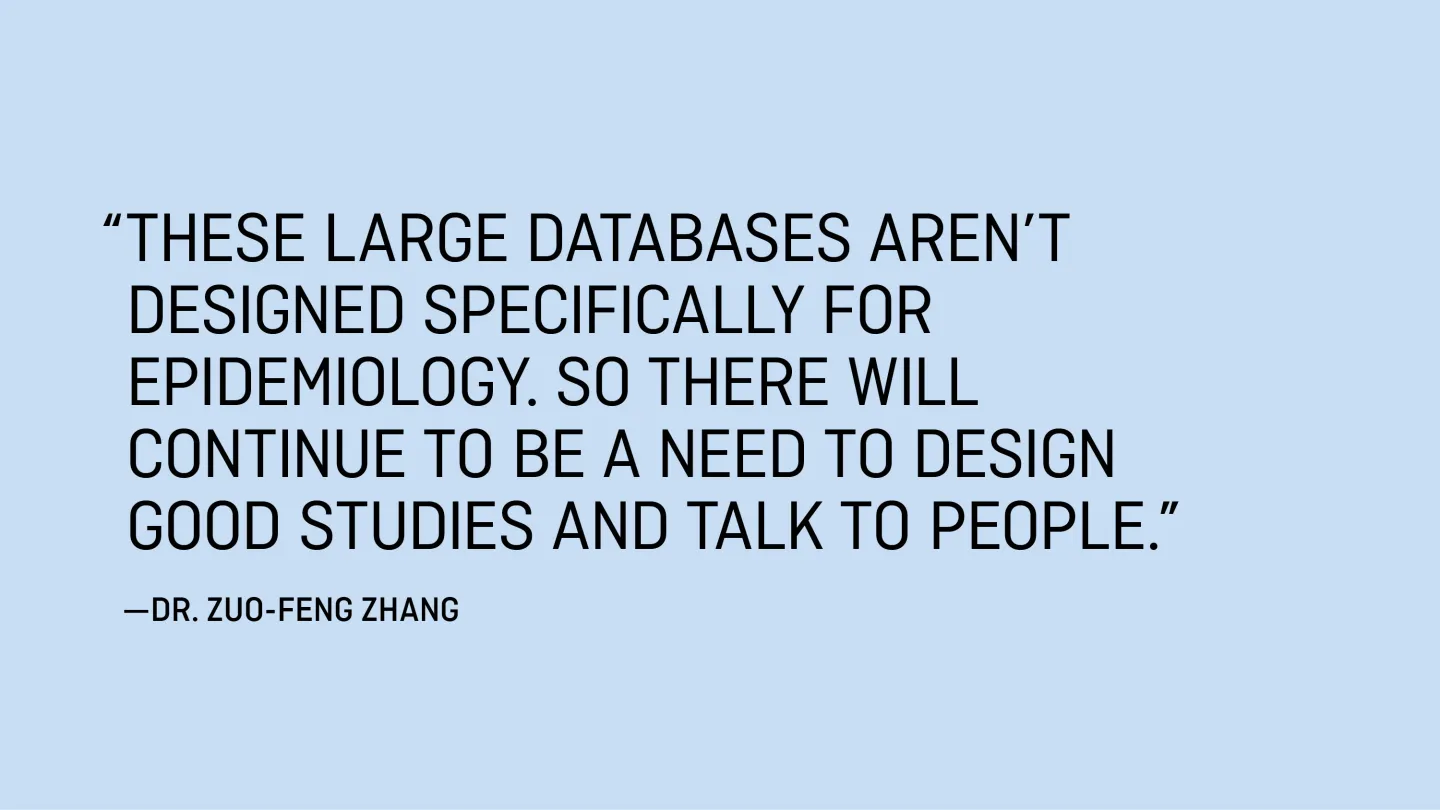
ZZ: It’s going to play a major part in future epidemiological studies, but it won’t eliminate our traditional methods. When I was starting, for all our studies we would get our participants’ contact information, go into the field, and talk to them. There’s less of that now, but these large databases aren’t designed specifically for epidemiology. So there will continue to be a need to design good studies and talk to people.
MH: I agree — AI will help us in terms of speeding up data analysis, but the complexity of epidemiologic studies will require humans to still design them. Even when we look at SEER-Medicare study data to analyze Asian cancer survivors and their risk of cardiovascular disease, we go back to focus groups and individual interviews to understand their experiences and how, for example, their culture impacts their treatment and their interactions with physicians. Some things you can’t get from big data. We will still need space for one-to-one interviews, which give a different level of depth to a study.
Faculty Referenced in this Article