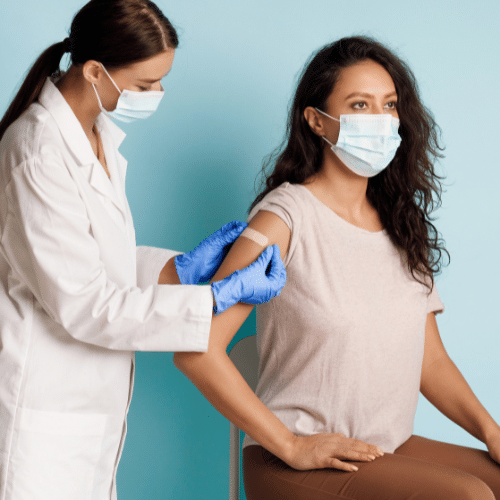
Existing Ebola vaccine generates immune response to virus driving current DRC outbreak
Study led by the UCLA Fielding School of Public Health and the DRC’s National Institute of Biomedical Research suggests current vaccine may be useful.
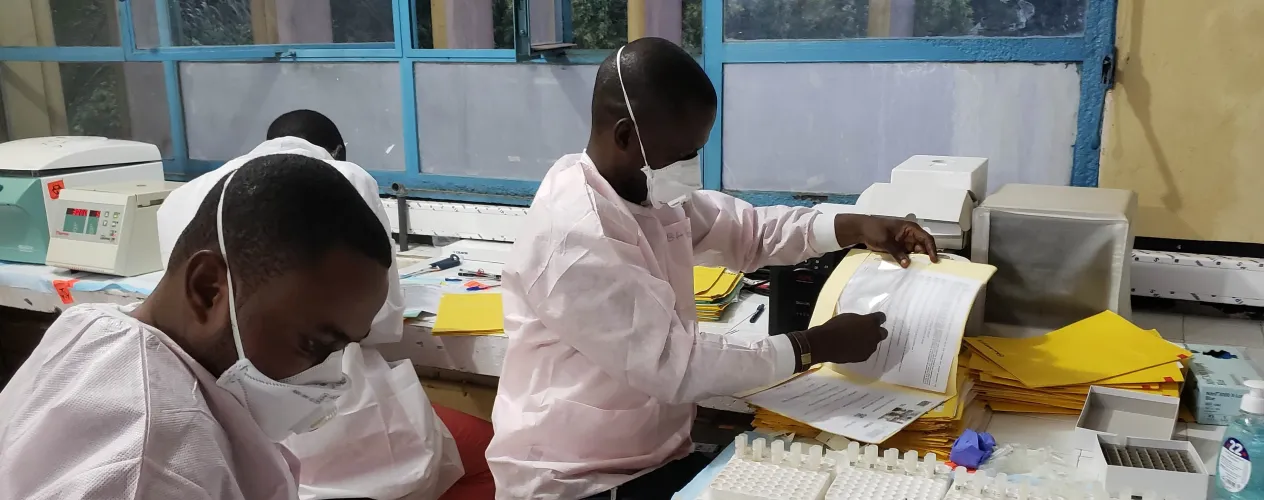
Researchers from the UCLA Fielding School of Public Health and the DRC’s National Institute of Biomedical Research (INRB) have provided new longitudinal human evidence that people in a region affected by the ongoing Bundibugyo Ebola outbreak show a measurable immune response to Bundibugyo virus (BDBV) over time after vaccination with ERVEBO, a vaccine licensed against Zaire ebolavirus. If randomized clinical trials show that this cross-reactive antibody response confers protection against disease caused by BDBV, ERVEBO could provide a much-needed tool in the response to the rapidly intensifying outbreak. The findings appear in the August 25 issue of the peer-reviewed journal The Lancet.
There is no licensed vaccine specifically targeting BDBV, and candidates are still months away from reaching clinical trials. But recent human and non-human primate evidence suggests that ERVEBO — which is the only licensed vaccine against Zaire ebolavirus, the most common cause of Ebola and a cornerstone of the response to the disease since demonstrating high efficacy during the 2018-20 DRC outbreak — generates cross-reactive immune responses to BDBV. The research team has now published the first longitudinal evidence from an affected population that the ERVEBO vaccination generates an immune response that also recognizes BDBV, providing an important lead at a time when it is urgently needed.
“Our study adds real-world human data to the accumulating evidence base, raising the possibility that people at risk during the current Bundibugyo outbreak could benefit from an already-licensed vaccine with demonstrated safety,” said study senior author Dr. Anne Rimoin, the Gordon-Levin Endowed Chair in Infectious Diseases and Public Health and director of the Center for Global Health Security at the UCLA Fielding School of Public Health. Rimoin, an internationally recognized epidemiologist who established the UCLA-DRC Health Research and Training Program in the DRC in 2004, in partnership with the Kinshasa School of Public Health and National Institute of Biomedical Research, noted that a clinical trial rigorously evaluating ERVEBO’s protective potential for the Bundibugyo virus could be embedded into the response to the current outbreak.
“When a new outbreak occurs, developing a vaccine to protect against it can take years,” Rimoin said. “These findings suggest that a vaccine that is licensed, stockpiled, and in use around the world could help us confront a different Ebola threat than we’re used to seeing. The antibody response to Bundibugyo from the ERVEBO vaccine doesn’t necessarily mean it protects against Bundibugyo virus disease, but it makes for a compelling case to find out. While efforts to develop a Bundibugyo-specific vaccine remain vital, we might already have a tool with the potential to save lives during this public health emergency.”
Although ERVEBO is immediately available through the global Ebola vaccine stockpile, Rimoin noted that the urgency of determining whether it could provide protection to at-risk populations during the current outbreak is heightened by the fact that approximately 80,000 doses are expected to expire before the end of this year, according to UNICEF.
The unfolding humanitarian and public health emergency in the DRC, first reported in May, is the largest BDBV outbreak and the second-largest Ebola outbreak of any kind worldwide, according to the World Health Organization. As of August 12, the DRC published a situation update reporting more than 4,500 confirmed cases of Bundibugyo-virus Ebola and more than 2,000 deaths. The vast majority have been in the DRC, though cases have also been reported in Uganda. One of several ebolaviruses, BDBV spreads primarily through direct contact with the blood or other body fluids of an infected person, or with contaminated objects. Infected individuals typically develop symptoms that can include fever, severe headache, weakness, vomiting, and diarrhea within three weeks of exposure, potentially leading to organ failure and death.
The current outbreak is centered in the DRC’s Ituri Province, in the northeast near the border with South Sudan and Uganda, but has spread to other parts of the country, including the North and South Kivu provinces. Complicating the outbreak response is its occurrence in a remote, densely populated region affected by conflict, population displacement, and limited healthcare resources.
The longitudinal cohort study originated in 2018, years before the current outbreak, when the UCLA-INRB team began collecting blood samples from healthcare workers and others who had received the soon-to-be-licensed ERVEBO vaccine in two areas of the DRC affected by an outbreak of the Zaire ebolavirus: Mbandaka, Equateur Province, in western DRC; and Beni, North Kivu Province, in eastern DRC. Beni is one of the current Bundibugyo outbreak hotspots, affording the study team with the unique opportunity to evaluate five years of longitudinal data and determine the extent to which a population vaccinated against the Zaire ebolavirus showed antibody responses to BDBV.
The study team analyzed blood samples collected seven times over a five-year period from nearly 1,100 participants, and found significant differences in the immune responses of the two cohorts. In Beni, BDBV antibody reactivity increased rapidly following the initial vaccination, with 52% showing antibody responses after 21 days and 54% after six months. Although antibody levels declined after six months, the immune response to BDBV among Beni cohort study participants remained higher throughout the five years than it had been prior to vaccination. In Mbandaka, antibody reactivity remained relatively stable after ERVEBO vaccination. The differing immune trajectories between the two cohorts suggest that BDBV antibody responses may be influenced by factors beyond vaccination alone, such as previous exposure to Ebola or other filoviruses.
“Populations in the DRC and other Central African nations experience a diverse range of infectious and environmental exposures at the human-animal nexus, which may shape their immune responses in ways that are distinct from urban populations in other parts of the world,” said study first author Dr. Megan Halbrook, an epidemiologist and senior program manager for the UCLA-DRC team. “The pervasiveness and diversity of filoviruses in the Beni area may explain why our study found such different responses to ERVEBO there than in Mbandaka. It’s also why, when vaccines and other therapeutics are developed, it’s extremely valuable to study them in the affected population, as we were able to do.”
Rimoin noted that the findings carry important implications beyond the immediate outbreak. “A vaccine designed against one species of Ebola virus appears to generate antibody responses to another species of Ebola virus in places where these outbreaks occur, raising the possibility that immunity to Ebola viruses may be broader than we had appreciated,” she said. “The next step is understanding why this is the case, which could help to inform development of a pan-ebolavirus vaccine.” Rimoin and her colleagues are currently following up with research aiming to better understand filovirus epidemiology and immunity.
Over the course of more than two decades, the UCLA-DRC Health Research and Training Program, based in Kinshasa, DRC, has trained dozens of Congolese scientists, strengthened health infrastructure, and transformed the field’s understanding of emerging pathogens through research conducted in 23 of the 26 DRC provinces. “This study reflects a long-standing partnership with a highly dedicated team whose expertise enables a contribution to this pressing scientific issue: the potential cross-protection provided by the ERVEBO vaccine against the Bundibugyo virus — the virus responsible for the recent major outbreak in the DRC,” said Dr. Placide Mbala, head of epidemiology and global health and an associate professor at the University of Kinshasa Medical School in the DRC.
The study was funded by the Gates Foundation, the U.S. Defense Advanced Research Projects Agency, and the U.S. Food and Drug Administration. “Collecting real-world human data is critical to helping us better understand Ebola virus that could eventually improve patient outcomes and strengthen public health preparedness,” said FDA Chief Scientist Steven Kozlowski, M.D. “The FDA facilitates the development and availability of medical countermeasures that can be used to diagnose, prevent, or treat emerging infectious disease threats, including Ebola, and was proud to fund this research.”
In addition to Halbrook (PhD ’21), co-authors included UCLA Fielding School of Public Health epidemiology graduates Dr. Nicole Hoff (PhD ’14), an adjunct associate professor in the Department of Epidemiology, and Sydney Merritt (MPH ’23), a current doctoral student in epidemiology.