UCLA expands its commitment to becoming a more ‘age-friendly’ campus
UCLA Fielding's Dr. Paul Hsu, assistant professor in the Department of Epidemiology, is part of a new effort to make UCLA more "age-friendly."
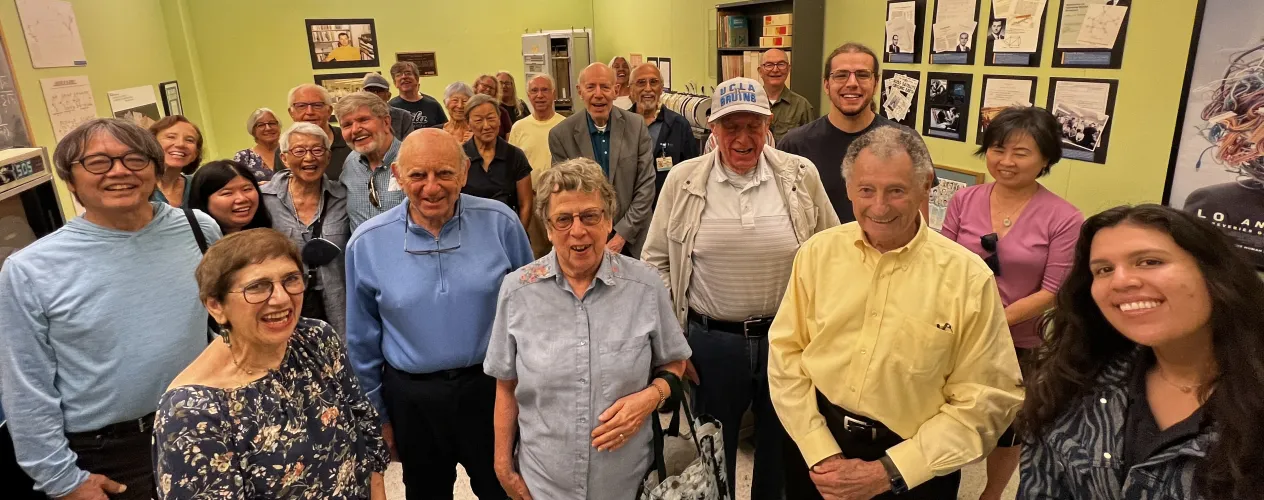
In 2018, UCLA became the first UC campus to join the Age-Friendly University Global Network, a consortium of higher education institutions dedicated to enhancing the lives of older adults through education, research and community engagement.
Since then, university has built a foundation of programs and partnerships based on the network’s 10 guiding principles that help older adults remain active, socially connected and engaged in the university community.
Now, UCLA is taking its commitment a step further by launching a new age-friendly website and establishing a cross-disciplinary task force that will bring together emeriti faculty, staff, retirees and students to promote healthy aging and combat ageism.
“UCLA is uniquely located at the center of one of the most diverse and influential global megacities, where we have the opportunity for active participation in the age-friendly movement,” said Ayesha Dixon, senior director of the UCLA Emeriti/Retirees Relations Center. “That includes cross-campus collaborations on equity and inclusion of older adults in the university community, supporting education and wellness initiatives, advancing research on aging and ageism, and fostering intergenerational learning.”
Faculty members of the team including UCLA Fielding’s Dr. Paul Hsu, a physician and assistant professor in the Department of Epidemiology whose expertise includes seniors’ health and wellness.
"I am very pleased to bring an epidemiological public health perspective to this work, and was honored to be asked to participate,” said Hsu, who served for 15 years as faculty lead on UCLA’s "Frontiers in Human Aging” initiative, an undergraduate honors “cluster” that focuses on successful aging across the lifespan. “Our ability at UCLA to bring expertise together from across campus is truly one of our strengths.”
A new portal for aging resources
The centerpiece of UCLA’s current phase in the age-friendly initiative is a comprehensive web portal that serves as a central hub for emeriti faculty, retirees and community members seeking information on aging-related resources, research and courses. Highlights include:
- UCLA Aging Cluster, which unites faculty across disciplines to study the biology, psychology and sociology of aging.
- UCLA Longevity Center, internationally recognized for its work on memory training, cognitive health and interventions to promote healthy aging.
- UCLA Extension courses designed to support lifelong learning and professional development for adults at all stages of life.
A showcase of ongoing research projects across campus examining the science of longevity, caregiving, health disparities and the impact of social connection in later life.
The site will also spotlight opportunities for intergenerational career mentorship, volunteer programs and wellness workshops, expanding avenues for Bruins of all ages to learn from one another.
Building cross-disciplinary collaboration
To guide this work, UCLA has convened an age-friendly task force made up of emeriti faculty, staff and retirees with expertise in gerontology, psychology, public health and social sciences. Members include leaders such as Alan Castel, a professor of psychology known for his work on memory and aging; Fernando Torres-Gil, director of the UCLA Center for Policy Research on Aging; and Paul Hsu, an assistant professor of epidemiology.
“The task force is about breaking down silos,” Castel said. “By collaborating across disciplines, we can create meaningful opportunities for older adults while enriching the educational experience for younger generations.”
The task force will recommend strategies for expanding intergenerational programming, reducing social isolation and ensuring equity for older members of the UCLA community.
A strong foundation in aging research and engagement
UCLA’s commitment to aging is not new. The Emeriti/Retirees Relations Center, through its partnership with the UCLA Retirees Association, has long offered programs that keep retired faculty and staff engaged in mentorship, volunteerism and advocacy.
The mentorship program, for example, pairs retired staff with current staff to offer guidance on career development, networking and work-life balance. The center also coordinates retirement planning workshops, lifelong learning programs and seminars, where emeriti share their expertise in fields ranging from history to engineering, ensuring knowledge continues to flow across generations.
These offerings are complemented by social and wellness activities such as walking groups, book clubs and mindfulness workshops, which help retirees maintain social connections and healthy routines while staying linked to the intellectual and cultural life of the university.
Together, these efforts reflect the university’s commitment to the Age-Friendly University principles — ensuring that older adults are valued contributors to campus life and society at large.
A community-wide mission
Dixon, a gerontologist, emphasizes that the age-friendly initiative is as much about changing attitudes as it is about creating resources.
“The age-friendly mission is to be an educational resource and guide for individuals to grow older with meaning and purpose,” she said. “But it’s also about helping the community recognize the value of every age group. When we create space for intergenerational learning and engagement, everyone benefits.”