UCLA Fielding School hosts website on history of pioneering public health scientist and practitioner John Snow
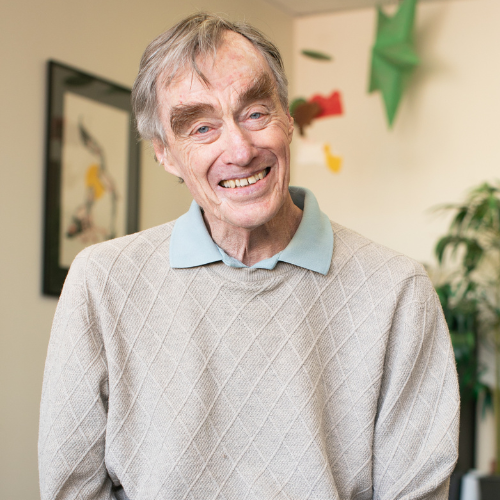
The site, created by Dr. Ralph Frerichs, professor emeritus in the Department of Epidemiology, is designed for the general public.

Over the course of five decades as an epidemiologist, Dr. Ralph R. Frerichs has tracked disease on five continents, but one of his most lasting accomplishments may have been to introduce generations of students to the basic concepts and history of his profession.
An educator at UCLA for more than three decades, his work has continued since his retirement in 2008, including through a website chronicling the life and times of Dr. John Snow (1813-1858). Snow, an English physician who rose from the humblest of beginnings in Nineteenth Century Britain to become one of the leading scientists of his era, investigated the causes of cholera, a severe disease that stems from the consumption of contaminated water and contact with human bodily wastes. Even today, it can be fatal within hours if not treated.
“Snow really is a hero, in my view; he’s widely held to be father of modern epidemiology, certainly in terms of being a scientist and a physician whose work - at both personal and professional risk - led to real advances in preventing what had previously been a deadly disease, in Britain and globally,” said Frerichs, professor emeritus in the UCLA Fielding School’s Department of Epidemiology. “Cholera remains a real threat, even in the 21st Century, and a lot of our ability to prevent outbreaks, of cholera and other infectious diseases, is based on lessons from Snow’s work.”
Snow’s pioneering research ranged from using anesthesia to assist women during labor to the health impact of alcoholism, but his most lasting impact is as a public health specialist who tracked the spread of cholera across London in the 1850s. In 1854, Snow examined a cholera outbreak in a single neighborhood that resulted in more than 600 deaths and found both a link to a single water source, known as the “Broad Street Pump,” and successfully argued the pump should be shut down. The outbreak ended shortly afterwards.
In a second investigation, Snow examined cholera mortality records from across the greater London area and found that households the communities that were hardest hit by cholera had received the most polluted water. Snow’s term for that analysis – “The Grand Experiment” – made clear both the cost of using contaminated water, and the very real benefit of providing clean water to households.
“In his ‘Grand Experiment,’ Snow demonstrated that persons in households drinking contaminated water piped from the nearby River Thames were much more likely to experience cholera than those drinking water from a company that had recently moved its water intake pumping station upriver, to a clean-water location,” Frerichs said. “This sounds obvious today, but at the time, he had to argue against others who suggested cholera spread through the air.”
Frerichs first created the site in 1999-2000, when he served as founding chair of the Department of Epidemiology. After his retirement, the site remained active, with 1.2 to 1.4 million hits, but became outdated. In 2024, epidemiology chair Dr. Zuo-Feng Zhang asked Frerichs to bring the site back with improvements, including illustrative maps and images.
“I think this is a very important website, and in fact I'd been using this website in my teaching; and one day the website disappeared,” Zhang said. “I was very unhappy, because this website brought epidemiology, and our department, to the attention a lot of people. This was very important, both for our reputation and as a recruitment tool, to help get a younger generation interested in epidemiology.”
Zhang approached Dr. Ron Brookmeyer, dean of the UCLA Fielding School of Public Health and a distinguished professor of biostatistics, and asked for the school’s support for the project. Brookmeyer agreed, Frerichs went forward with the project, and the updated result has been unveiled.
“My goal in all this has been to bring life to a remarkable, even legendary figure,” Frerich said. “I think all who helped bring the site to fruition know we have been pretty successful.”
Funding
This project has been made possible by support from Dr. Ralph R. Frerichs, the UCLA Fielding School’s Department of Epidemiology, the UCLA Fielding School of Public Health, and UCLA.