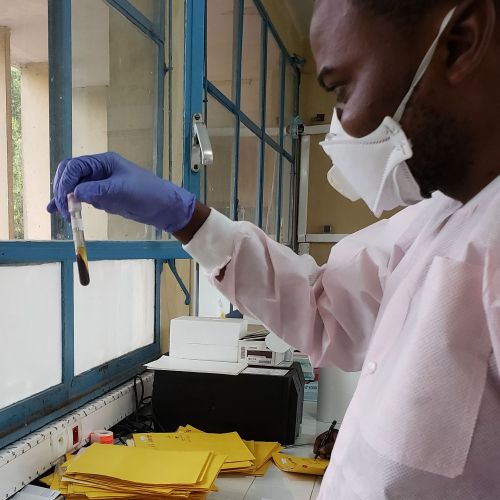
International team led by UCLA Fielding receives $2 million grant for research into Bundibugyo virus
The studies, led by UCLA Fielding faculty, will analyze blood samples from thousands of people who have already been vaccinated against ebolavirus.
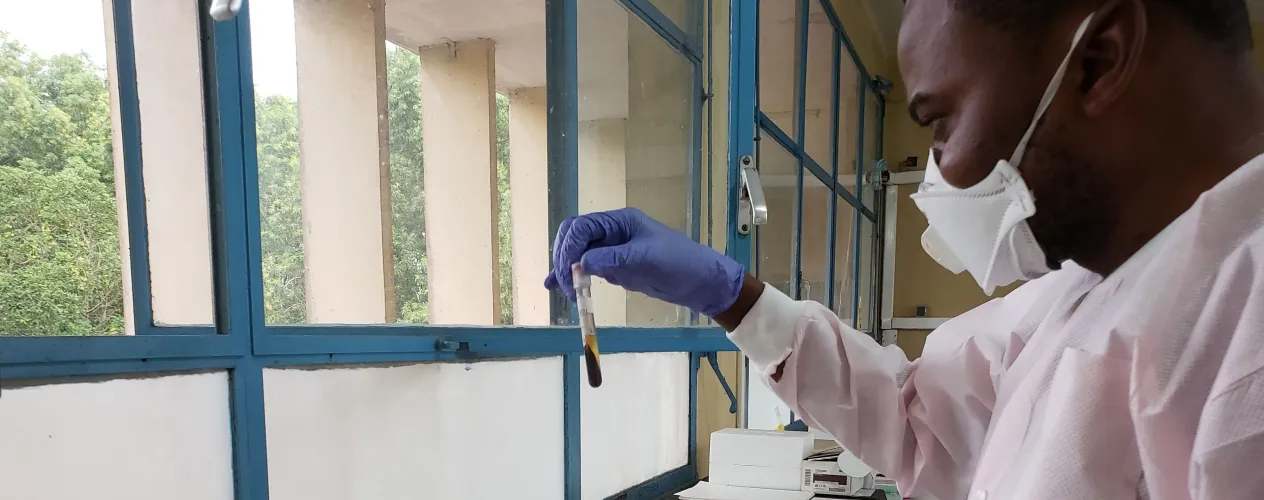
A research team studying the fast-moving Bundibugyo virus has received a $2 million (USD) grant to examine whether vaccinations for the Ebola virus may also help prevent the related Bundibugyo virus, which has claimed at least 2,100 lives in the past several weeks.
The 12-month-long study, announced today and funded by the Oslo, Norway-based Coalition for Epidemic Preparedness Innovations (CEPI), will be led by a UCLA Fielding School of Public Health team, in collaboration with the Institut National de Recherche Biomedicale (INRB) in the Democratic Republic of the Congo (DRC); the University of Manitoba and Public Health Agency of Canada’s National Microbiology Laboratory; the University of Texas Medical Branch; and Columbia University, along with other collaborators.
“When an outbreak is moving this quickly, we cannot afford to start from zero,” said Dr. Anne Rimoin, UCLA Fielding’s associate dean of global health and a professor in the Department of Epidemiology.
Rimoin, who also holds the Gordon-Levin Endowed Chair in Infectious Diseases and Public Health and serves as director of the UCLA Center for Global Health Security, has worked on infectious disease research and prevention projects across Africa since early in the century.
“Through more than two decades of collaboration, UCLA and INRB have built longitudinal cohorts and laboratory expertise that we can draw on now, together with our scientific partners, to rapidly generate rigorous evidence to inform vaccine evaluation,” Rimoin said.
The study will draw on long-running cohorts of people who received either of the licensed/previously licensed Zaire ebolavirusvaccines (Ervebo and Ad26.ZEBOV/MVA-BN-Filo [Zabdeno/Mvabea]). Drawing from a subset of data gathered from more than 1,700 participants, approximately 800 stored serum and plasma samples will be examined, researchers will assess immune responses to determine whether these vaccines may trigger protective antibody responses against Bundibugyo virus.
“This work also builds on longstanding scientific partnerships and infrastructure that will help us respond more effectively to this and future Ebola outbreaks,” Rimoin said.
That level of experience was a major element in CEPI’s decision to fund the vaccine antibody response study, one of four projects funded in response to the current outbreak, officials said.
“There is no licensed vaccine against Bundibugyo virus. CEPI is funding multiple Bundibugyo vaccine candidates to address this gap, but even on the most compressed timelines those vaccines will not be available for the earliest phase of this outbreak,” said Dr. Richard Hatchett, CEO of CEPI. “However, vaccines do exist for the related Zaire ebolavirus, including Ervebo. Given the recent announcement that Ervebo will be deployed for emergency use against Bundibugyo virus, these CEPI-backed studies will be all the more important to inform on how we can make the best use of the existing vaccine.”
The other studies include efforts led by the Antwerp, Belgium-based Institute of Tropical Medicine (ITM), and both Oxford University and the University of Glasgow in the United Kingdom. Along with the UCLA Fielding-led study, the INRB will also partner with the ITM, officials said.
“This foundation gives us a valuable head start in finding out whether existing Ebola vaccines can provide cross-protection against Bundibugyo ebolavirus and other known ebolavirus species,” said Prof. Sabue Mulangu, professor of clinical immunology at the INRB. "This helps us respond more quickly to future outbreaks caused by less well-known species.”
The project builds on the existing partnership between researchers at the INRB and the UCLA team, which has been in place for decades.
"When this call was released, we were able to quickly react with a wealth of biobanked samples that could actually help to understand if this vaccine could potentially also protect - even for a short time - against another strain of the virus, Bundibugyo virus,” said Dr. Nicole Hoff, assistant professor in UCLA Fielding’s Department of Epidemiology who has worked in Africa for the past five years. "We have also been fostering many collaborative lab relationships and were able to bring together a world-class team with the same objective and all with the desire for as much of this project as possible to be done in the DRC, which is a huge win for increasing capacity for conducting and completing the research in a low resource setting.”
How the studies support vaccine development
The research teams will analyze stored blood samples from individuals vaccinated with licensed/ previously licensed vaccines against Zaire ebolavirus either in previous vaccination campaigns and/or clinical trials. They aim to characterize vaccine-induced immune responses and assess cross reactivity and potential for cross-protection of antibody responses against Bundibugyo ebolavirus.
The critical data from these serology studies will help establish and standardize tests for antibodies against Bundibugyo virus and use longitudinal samples to potentially define the dynamics and durability of these responses. Data from these studies will also aid interpretation of immune responses in clinical trials, help assess whether Bundibugyo-specific antibodies are associated with protection, and inform future vaccination strategies and evaluation of Bundibugyo-specific and broadly protective filovirus vaccines.
In recent weeks, new data have emerged indicating that further prospective evaluation of Ervebo is warranted. Consequently, the WHO Technical Advisory Group on Candidate Vaccine Prioritization (TAG-CVP) has recommended that Ervebo be evaluated in a Phase 3 clinical trial, in addition to Bundibugyo-specific vaccine candidates when they are ready. The DRC authorities and Africa CDC have announced plans to deploy Ervebo to priority groups under protocol-governed expanded use. The CEPI-backed studies will rapidly generate additional evidence to help fill outstanding gaps in knowledge and contribute to decision making about how Ervebo can be used in this and future responses.
These awards were selected through a CEPI call for proposals focused on the generation of evidence to support Bundibugyo vaccine research and development, published in June 2026. All partners will support publication of the project results in open access journals for the benefit of the global community.
To date, CEPI’s Bundibugyo virus vaccine development program receives funds from the European Commission through its 2026 grant under Horizon Europe to CEPI, the U.S. Department of State and CEPI's existing core funding.