Live long and prosper: New UCLA institute aims to turn research into real-world impact
The Prosper Institute, led by UCLA Fielding's Dr. Felicia Knaul, will strengthen connections among faculty and disciplines, including public health.

It’s increasingly clear that most of the world’s toughest challenges can’t be solved by experts working in isolation. They demand fresh ideas, expertise from a wide range of disciplines, and a willingness by creative thinkers to cross boundaries and work side by side.
UCLA’s new Prosper Institute for Human, Social, and Economic Development is designed to inspire and support those connections, bringing researchers, educators and community partners together to tackle complex problems and translate academic expertise into meaningful, lasting change.
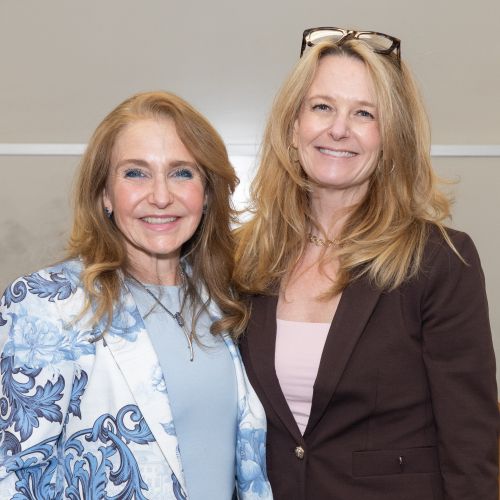
Announced Nov. 17 by UCLA economist and global health leader Felicia Marie Knaul during International Education Week, the campus-wide institute will focus on a range of issues affecting the people of Los Angeles and communities throughout the world, from health care and social justice to higher education. Knaul, associate vice chancellor for research and creative activities and a professor at the schools of medicine, nursing, public health and public policy, will lead the effort.
It’s an initiative that UCLA, with its extraordinary breadth of expertise across schools, departments and research centers, is uniquely positioned to undertake, Knaul said.
To strengthen the connective tissue among these campus units, the institute will work with faculty to develop joint research projects, pursue funding for promising ideas, and forge partnerships with local and global communities and public institutions. Rather than duplicating existing efforts, Prosper will help bring research already underway into larger, more integrated collaborations while supporting the development of new projects around shared goals.
“The world’s most pressing challenges don’t fit neatly within the boundaries of any one academic discipline, and neither should our efforts to solve them,” said Darnell Hunt, UCLA’s executive vice chancellor and provost. “The Prosper Institute embodies the spirit of One UCLA by connecting expertise across campus, building on existing research and creating new opportunities for collaboration. Together with partners in LA and around the world, we can turn that knowledge into meaningful improvements in people’s lives.”
Paths to progress: How Prosper will put big ideas to work
Prosper’s initial work centers on three interdisciplinary initiatives — advancing global health, preventing violence against women and children, and reimagining the future of universities.
As part of the global health effort, for example, faculty from multiple schools and departments will come together to examine how health systems can improve access to comprehensive cancer care. Building on an existing international collaboration launched by The Lancet, the research will explore not only medical treatment but the financial, social and policy barriers that affect patients throughout the world.
“The challenges that affect people’s health and well-being rarely have a single cause or a simple solution,” said Dr. Kari Nadeau, dean of the UCLA Fielding School of Public Health and a member of Prosper’s faculty advisory committee. “Addressing them requires us to look beyond traditional academic boundaries and bring together expertise in medicine, public health, economics, education and other fields. Prosper offers an exciting opportunity to connect that expertise, build on research already underway and work with communities to develop solutions that can make a lasting difference.”
Central to the institute’s mission is UCLA’s “glocal” approach to bridge-building and problem-solving — one that recognizes that challenges confronting local Los Angeles communities are often deeply connected to those faced by communities across the globe, and vice versa. Research and solutions developed in one setting are crucial to informing work and progress in others, Prosper’s organizers stress.
“Understanding and addressing global challenges requires collaboration across the disciplines and between academia and UCLA’s wider communities,” said Cindy Fan, vice provost for international studies and global engagement and chair of Prosper’s faculty advisory committee. “The Prosper Institute will be doing exactly that.”
Housed within UCLA’s Office of Research, Innovation and Creative Activities, the institute will also offer opportunities for students to participate in faculty-led multidisciplinary research projects, providing hands-on experience in tackling real-world issues. And as Prosper grows, the institute envisions increased opportunities for student research and fellowships.
With its faculty advisory committee continuing to shape programs and priorities, Prosper plans to expand opportunities for collaboration through research convenings, seminars, and seed grants and fellowships. Initial programming is expected to begin in early 2027, with additional activities introduced as projects unfold.
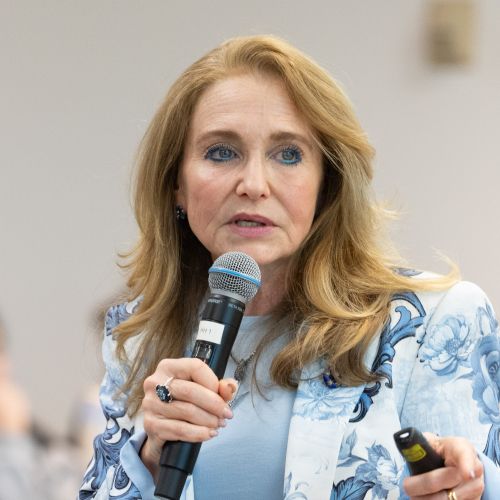
In her Nov. 17 presentation, Knaul drew on the famous “Star Trek” salute to live long and prosper. “To live long and prosper,” she said, “is to live with dignity, opportunity and relief from avoidable suffering. It means individuals and communities having the capability and support to live lives they value and thrive. That is what motivates Prosper’s mission and ties these projects together.”