UCLA Fielding-led study of health impact of 2025 Los Angeles wildfires receives $1.8 million grant to expand project
Funding from Kao Family Foundation will advance long-term research on the fires’ physical and mental health impacts and community resilience.
A landmark study of the long-term health impacts of the 2025 Los Angeles County wildfires has received a $1.8 million grant that will support the work for almost a decade.
“As wildfires become more frequent and severe, there is an urgent need for evidence that can help communities, health systems and policymakers better prepare for and respond to these events,” said Dr. David Eisenman, a physician and professor in the UCLA Fielding Department of Community Health Sciences and co-director of the UCLA Center for Healthy Climate Solutions. “The Kao Family Foundation’s support is a tremendous vote of confidence in the importance of understanding and addressing the health impacts of the Los Angeles fires.“
The new funding will support research into exposure science using data provided by volunteers for the UCLA Wildfire Impacted Communities Research Registry, now as part of the larger, existing L.A. Fire HEALTH Study team, led by UCLA Fielding Dean Dr. Kari Nadeau, Eisenman, and Dr. Michael Jerrett, Jonathan Fielding Chair in Climate Change and Public Health, co-director of the UCLA Center for Healthy Climate Solutions, and professor in the UCLA Fielding Department of Environmental Health Sciences. Together, they lead a team of researchers with the UCLA Center for Healthy Climate Solutions, and the Kao Foundation funding will expand the team’s research into the long-term physical and mental health impacts of the 2025 Los Angeles County wildfires on residents, first responders and other affected communities.
The L.A. Fire HEALTH Study is a comprehensive, multi-institutional collaboration examining the short- and long-term health consequences of wildfire exposure, with UCLA’s portion of the research focused on the aftermath of the 2025 fires. Specific elements within the greater study include projects, like the registry, designed to identify the physical and mental health impacts of the fires, improve understanding of which populations are most vulnerable, develop and evaluate strategies to reduce health risks, and identify ways to strengthen community resilience and preparedness.
“Like so many Angelenos, we were deeply concerned about potential long-term health issues from the 2025 L.A. fires, and wondered who, if anyone, would be studying these exposures over time,” said Jen Kao, vice president of the Kao Family Foundation. "We were grateful to find the L.A. Fire HEALTH Study and were impressed with both the research and the Study’s commitment to direct engagement with affected communities. For us, the Study is aligned in that it lies at the intersection of human health and a changing environment, with important long-term implications for our collective future with wildfire.”
The registry connects people affected by the Los Angeles wildfires with research opportunities focused on understanding the fires’ impacts on health and well-being. It will also serve as the basis for a nine-year cohort study examining long-term health effects and helping researchers better understand how wildfire-related exposures may affect communities over time.
“This award is especially meaningful because it provides sustained support over nine years, allowing us to pursue long-term research questions that are often difficult to study through shorter funding cycles,” Eisenman said. “It will help us deepen our understanding of how wildfire exposures affect physical and mental health, identify populations at greatest risk and develop strategies to reduce health harms and improve resilience.”
Launched in January 2025, the L.A. Fire HEALTH Study is a 10-year consortium led by Nadeau and researchers from the UCLA Fielding School of Public Health, Harvard T.H. Chan School of Public Health, the University of California, Davis, and the University of Texas at Austin. The collaboration brings together expertise in environmental exposure assessment, health outcomes, wildfire risk assessment and management, and data science.
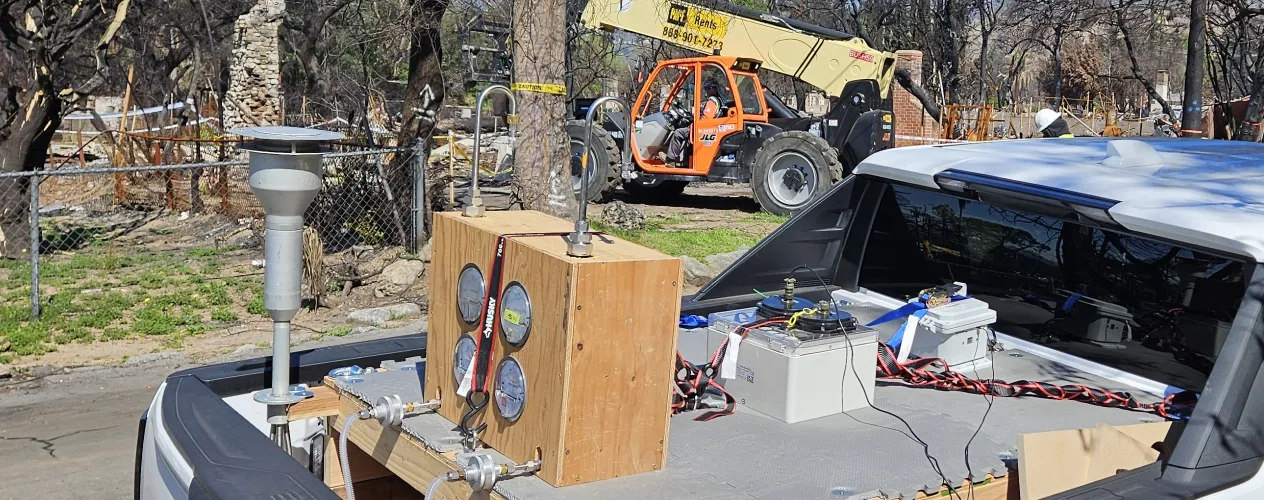
The study’s exposure science work is examining the pollutants released by the fires, how exposure levels vary by location and change over time, and whether the fires and their aftermath are associated with chronic health effects. Unlike fires in open areas, the Los Angeles fires burned large numbers of structures, vehicles and household products, creating a different mix of potential exposures for researchers to study. Researchers are assessing potential respiratory, neurological, cardiovascular, reproductive, and immune system impacts, among other possible consequences of wildfire exposure.
The researchers aim to provide affected communities, first responders, health systems, and government agencies with evidence that can inform recovery efforts and help reduce the health risks associated with future wildfires.
“Most importantly, I am excited about the opportunity to generate knowledge that can benefit not only Angelenos but also communities around the world facing similar climate-related challenges,” Eisenman said.
The long-term commitment from the Kao Family Foundation will allow researchers to continue studying health effects that may emerge or change over time while working with communities to translate research findings into practical strategies for preparedness, response, and recovery.
“We are deeply grateful to the Kao Family Foundation for its generous partnership and commitment to this important work,” Nadeau said. “Their support is helping advance research that will have a meaningful impact on communities affected by the Los Angeles wildfires and beyond.”
Learn more about the L.A. Fire HEALTH Study and the broader multi-institutional collaboration and support its efforts here.