UCLA Fielding School of Public Health graduate student Miller Finkelstein awarded scholarship
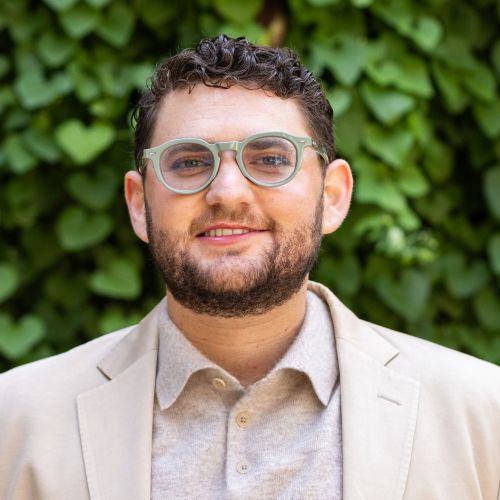
Miller Finkelstein, a student in the Executive Master of Public Health program, has been awarded a $10,000 scholarship for his health research work.

Miller Finkelstein, a student in the Executive Master of Public Health (EMPH) program, has been awarded a $10,000 scholarship from the UCLA Health Policy and Management Alumni Association (HPMAA) for his exceptional record in health services research; he is currently a research data scientist in the Women’s and Children’s Institute at the Cleveland Clinic Foundation.
The EMPH program is led by Dr. Isomi Miake-Lye, assistant professor in the Department of Health Policy and Management, which administers the EMPH program through the Office of the Executive Programs in HPM.
Finkelstein spoke with UCLA Fielding's Gigi Hooghkirk about his background and experience in the program.
Q: What drew you to UCLA to pursue your MPH in Health Policy and Management?
Finkelstein: It offers an excellent opportunity to receive an incredible education from world class faculty by developing my professional skills in the health care industry. In addition to strengthening my knowledge of public health, the institutional support offered by the faculty to cultivate expertise in project management, quality improvement, and health care systems administration will be vital skills to have within this next era of healthcare innovation. I am eager to develop strengths in evaluation, reproductive & LGBTQ+ health advocacy, and e-health projects that drive innovation in patient care, democratize patient agency, and build adaptive learning opportunities that help patients address personal needs while informing them about public health frameworks.
Q: What is your primary passion or focus within public health/healthcare?
Finkelstein: My primary focus is improving the accessibility, responsiveness, and equity of healthcare and public health systems. I am particularly interested in patient-centered healthcare innovation, health communication, and ensuring that organizational policies and practices reflect the experiences of patients and communities. I am passionate about using research to identify where systems are not meeting people’s needs and then translating those findings into practical improvements in care delivery, organizational decision-making, and public policy.
Q: What is your background in public health and healthcare?
Finkelstein: My background bridges public health, healthcare research, sociology, and community-based work. I have experience conducting mixed-methods research on reproductive health, youth homelessness, LGBTQ+ health, behavioral health, and barriers to accessing health and social services. Across these areas, I have been especially interested in how institutions, policies, and systems shape people’s experiences with and access to care.
Q: What is your current role and primary responsibilities?
Finkelstein: At Cleveland Clinic, I support multidisciplinary research examining patient experiences, healthcare communication, and decision-making tools related to prenatal genetic screening and diagnostic testing. My responsibilities include conducting and analyzing qualitative interviews, developing coding frameworks, managing and interpreting research data, and contributing to important research. I also collaborate with clinicians, researchers, and project staff to translate patient and provider perspectives into findings that can improve healthcare communication and delivery.
Q: What key experiences, clinical training, fellowships, or research projects have shaped your career so far?
Finkelstein: My current research at Cleveland Clinic has been particularly influential in shaping my interest in healthcare innovation and patient-centered care. I have conducted and analyzed interviews focused on prenatal genetic screening, patient understanding of complex health information, provider communication, fetal anomaly counseling, and the emerging use of artificial intelligence and large language models to obtain health information.
My master’s thesis, “Bouncing Around the System: Youth Homelessness Service Provider Outreach Analysis,” examined factors associated with whether young people experiencing homelessness had recent contact with service providers. That project strengthened my interest in health equity, service accessibility, and the ways health and social-service systems can better reach populations whose needs are often unmet.
Additional research and professional experiences involving LGBTQ+ health, homelessness, mental health, and community-based services have reinforced my commitment to improving systems for populations that experience structural barriers to care.
Q: Where do you plan to take your career after earning your MPH degree?
Finkelstein: I want to partner and work with organizations who want to innovate, imagine new ways to utilize public health frameworks to serve people, and create more equitable health outcomes. I wish to be a part of transformative research, projects, and policy making that help people thrive because of their access to healthcare, not in spite of it. I hope to pursue work that centers advocacy, research, and key making to systems that are often gatekept. I want to be a part of world-building that makes our identities the things that give us agency, voice, power, and access to deep understanding. I want to live in a world where our diagnoses do not dictate outcomes but help us build better systems.
Q: What does this recognition by HPMAA mean to you?
Finkelstein: Receiving the HPMAA Scholarship is incredibly meaningful because it recognizes my commitment to improving healthcare through research and innovation. My work has shown me how important it is for healthcare systems to be responsive to the needs and experiences of patients, and this scholarship strengthens my ability to pursue that mission. Across every stage of my career, I have been motivated by the belief that meaningful change begins with listening to people, understanding their experiences, and approaching them with empathy and respect. I am grateful for the confidence the HPMAA has placed in me and excited to continue growing as a public health leader.