Major Impact
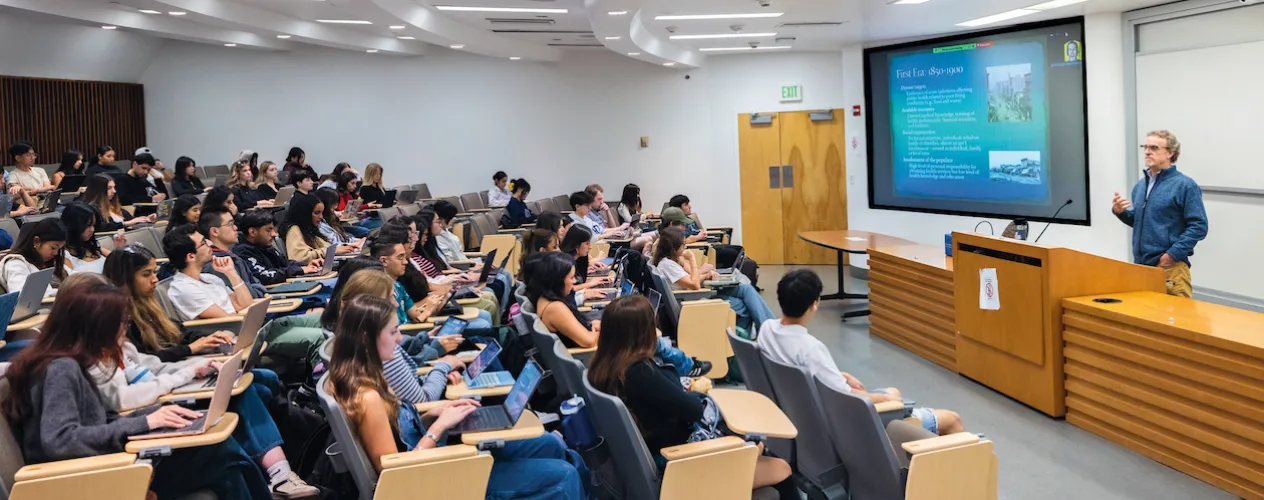
In a lecture hall on the seventh floor of UCLA's Center for the Health Sciences on a Wednesday afternoon in April, the discussion centers on whether the U.S. healthcare system has entered a new era.
How might AI and the move toward precision medicine transform the diagnosis and treatment of patients — as well as, potentially, widening existing health disparities? Will a greater recognition of the importance of such factors as housing, the physical environment, and access to healthy foods lead to more effective strategies for improving communities’ health? In the era of social-media influencers and vaccine skeptics, what’s happening with the physician-patient relationship, and is science too often taking a back seat?
The individuals wrestling with these and other lofty topics are undergraduate students in HPM 120, one of the required classes for enrollees in UCLA’s undergraduate public health major. The course, taught by Dr. Burt Cowgill, associate professor in the UCLA Fielding School of Public Health’s Department of Health Policy and Management, introduces students to the basic concepts underlying healthcare systems organization, finance, and policy.
And if the debate over the direction of healthcare in the U.S. remained unsettled by the end of the discussion, the students are in agreement on the value of applying the public health framework to the challenges ahead.
For Itzel Herrera, the classroom discussions about inequalities within the healthcare system resonate with her life experience. Herrera grew up in South Los Angeles, the daughter of immigrants. With no hospital or clinic nearby, she recalls taking long bus trips with her mother to see her pediatrician, and accompanying her mother for her appointments, where Herrera was asked to translate instructions into Spanish — something she felt ill-equipped to do as a child.
After entering UCLA as a physiological science major, Herrera switched to public health for her junior year, along with a double minor in environmental systems and society, and geospatial information systems (GIS) and technology. She began working as a GIS intern for the nonprofit environmental organization Breathe Southern California, which promotes clean air and healthy lungs through research, education, advocacy, and technology.
Herrera plans to apply her public health education to a career as a GIS analyst. “I’ll have a different perspective than most,” she says. “Public health is teaching me that there are many ways to approach inequalities, and that everything is connected.”
Cowgill says his undergraduate students are every bit as engaged in the content as the master’s and professional students he’s taught for the last 12 years. “No matter what discipline you go into, public health is a way of thinking in which you’re addressing problems at a population level — from making healthcare accessible to building communities where there are affordable fresh fruits and vegetables, safe places to exercise, and minimal effects of pollution,” he says. “COVID shed a big light on public health, and now we’re helping the next generation understand the broad impacts it can have.”
In 2023, UCLA Fielding began offering two undergraduate public health degree programs — the Bachelor of Arts and Bachelor of Science — for the first time in four decades. The undergraduate public health minor, also taught by FSPH faculty, had been an option for students since 2003. Even in the years prior to the COVID-19 pandemic, interest in public health among UCLA students had soared, notes Dr. Kyle McJunkin, FSPH assistant dean for academic programs, with applications to the minor increasing by more than 70% from 2015 to 2020, and many more students outside the minor enrolling in the growing number of public health courses offered. That interest has only grown in the three years since the major was reinstated. In freshman applications to UCLA for 2025-26, public health was among the top 15 majors selected out of approximately 140 options, McJunkin says.
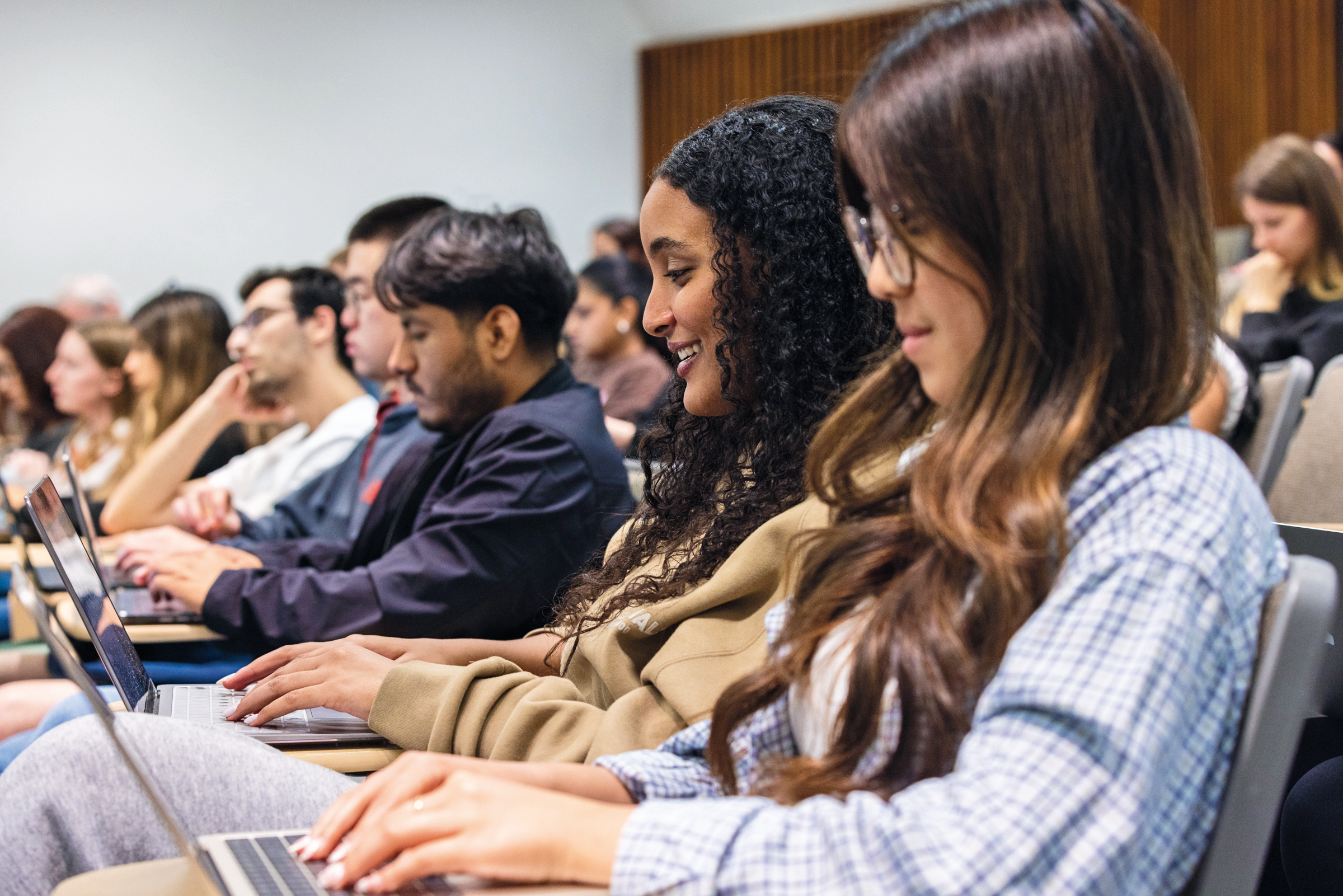
Jessika Herrera, FSPH director of undergraduate student services, says students tend to be drawn to the program by their lived experiences. “For a lot of them, public health is something that is very personal,” she says. “Students feel a direct connection to what they’re learning in the classroom, and are driven by a desire to make things better for people they’ve seen as left behind.”
McJunkin oversees the major’s community engagement requirement, in which students complete 80 to 100 hours in an appropriate corporate, governmental, research, educational, or nonprofit setting. With the support of a graduate student instructor, the experience allows students to examine, learn, and reflect on issues related to working in the field of public health. Students also complete a two-quarter capstone project focused on a public health issue. “Our students come with their sleeves rolled up, anxious to put what they’re learning into practice,” says Cowgill, whose PH 191C class, offered for the first time this year, had students evaluate a gang alternatives program and present their findings to the organization’s leadership.
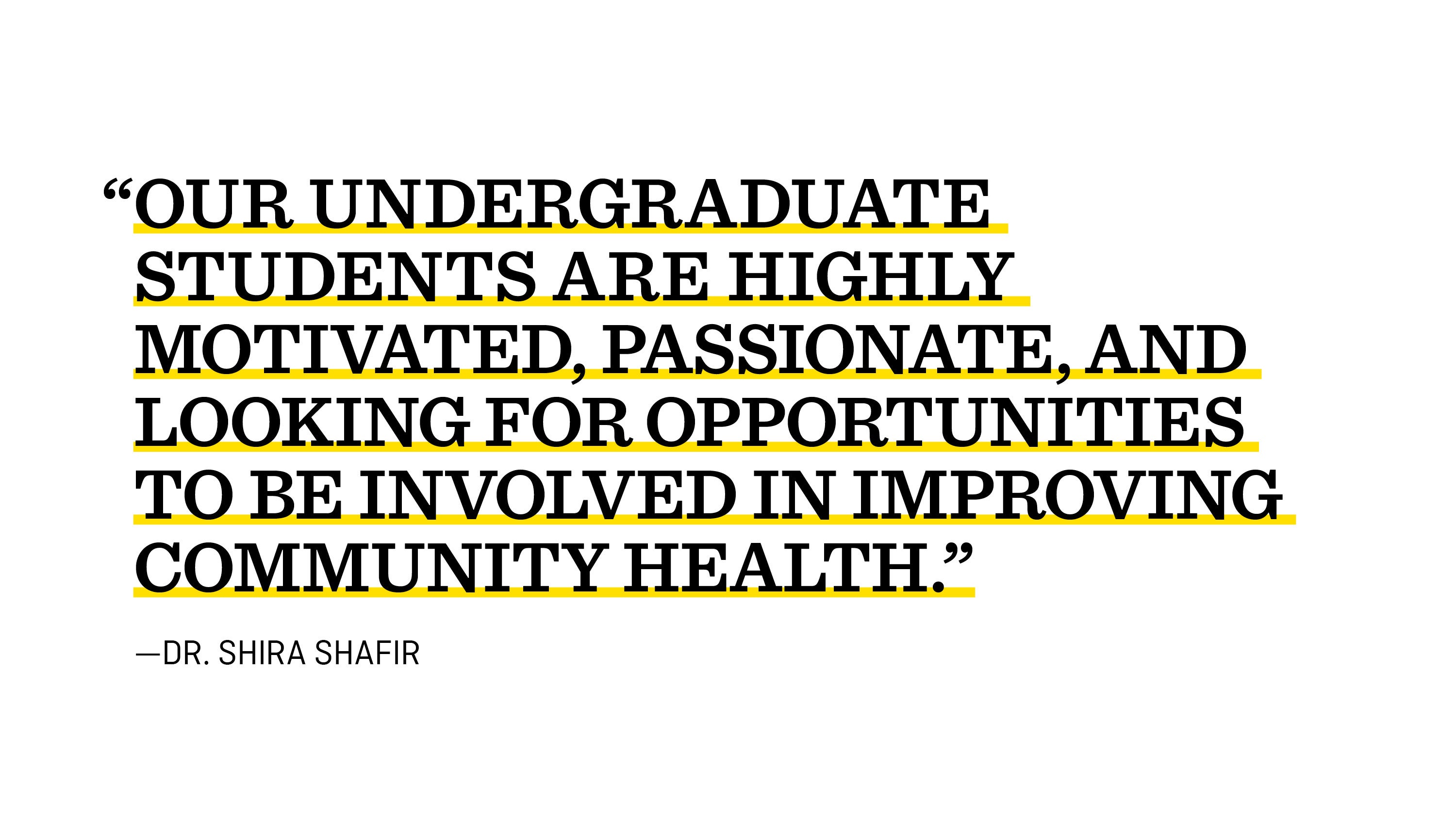
Dr. Shira Shafir, professor in UCLA Fielding’s epidemiology and community health sciences departments, taught CHS 120, the core course in community health sciences, for the first two cohorts of public health majors. Beginning with the 2025-26 academic year, she’s teaching PH 50A and 50B, which provide a foundational introduction to the field. “Our undergraduate students are absolutely stellar,” Shafir says. “They are highly motivated, passionate, and looking for opportunities to be involved in improving community health.”
Shafir says a transformative moment for many undergraduate public health students comes at the beginning of the first course, PH 50A, when she emphasizes that very often, a person’s ZIP code matters more for their health than their genetic code. “It’s incredible to see students begin to reimagine how to make communities healthier when they realize that health isn’t just about a physician making a diagnosis and writing a prescription,” Shafir says. “A lot of these students are premed and had thought of treating patients as the one way to impact health. What I enjoy most is the opportunity to introduce them to this discipline about which I’m so passionate, and to show them the power a public health-based approach can have on a population level.”
Because public health isn’t addressed in most high schools, exposing UCLA undergraduates before they’ve made decisions about graduate school and their careers is an important way to draw top minds to the profession. But Dr. Ron Brookmeyer, FSPH dean and distinguished professor of biostatistics, points out that the exposure is important regardless of whether students ultimately pursue public health careers. “These students are learning about prevention, health equity, and a population-based approach to solving problems,” Brookmeyer says. “That kind of thinking is invaluable regardless of the profession they choose.”
McJunkin believes one of the keys to the undergraduate major’s popularity was the investment by Brookmeyer in recruiting some of UCLA Fielding’s strongest classroom instructors for both the core courses and the electives. Among the faculty who eagerly stepped forward to teach the undergraduates was Dr. Robert Kim-Farley, FSPH professor of epidemiology and community health sciences. Kim-Farley’s experience is broad: At various points in his career he has worked internationally — at the World Health Organization’s headquarters in Geneva, at its Southeast Asia regional office, and at its offices in Indonesia and India; nationally, as a member of the U.S. Centers for Disease Control and Prevention’s Epidemic Intelligence Service; and locally, as director of communicable disease control and prevention for the Los Angeles County Department of Public Health.
“It’s been a great transition in my career to be able to excite the next generation about public health,” says Kim-Farley, who taught PH 50A and 50B to the major’s first three cohorts and most recently developed a new course, EPI 160, on the principles of infectious disease prevention and control. As part of his commitment to supporting undergraduates, Kim-Farley — along with his wife, Han Ju Kim-Farley, also a public health expert — established an endowment to provide financial support and recognize the academic excellence of the top GPA graduating students in the BA and BS programs each spring.
Kim-Farley says when he was teaching the introductory courses, many of his students were surprised at the breadth of the field. “There are so many ways public health touches us in everyday life, and that large umbrella means there’s a place for students with a wide variety of interests,” he says.
The fact that public health brings together people with wide-ranging interests isn’t lost on Courtney Ralph, a junior with plans to go to graduate school and become a physician assistant. Ralph, who transferred to UCLA and the public health major for her junior year, became interested in public health after coming to appreciate its importance during COVID. “I realized that what causes people to become sick is much deeper than the individual, and that if I wanted to be a provider it would be important to have more insight on that,” she says. “I want to be someone who doesn’t just diagnose and treat illnesses, but who works with communities and recognizes all of the things that go into health.”
As the HPM 120 class session concludes, Ralph reflects on her experience nearly a year into the program. “It’s a small cohort, so we all take classes and study together, and it’s so inspiring to be around these future leaders,” she says.
“Everyone has very different goals, and we all want to help each other get there. And who knows — maybe one day we’ll be colleagues who will collaborate with each other to make a difference.”
Student Profile
Brenda Osagie
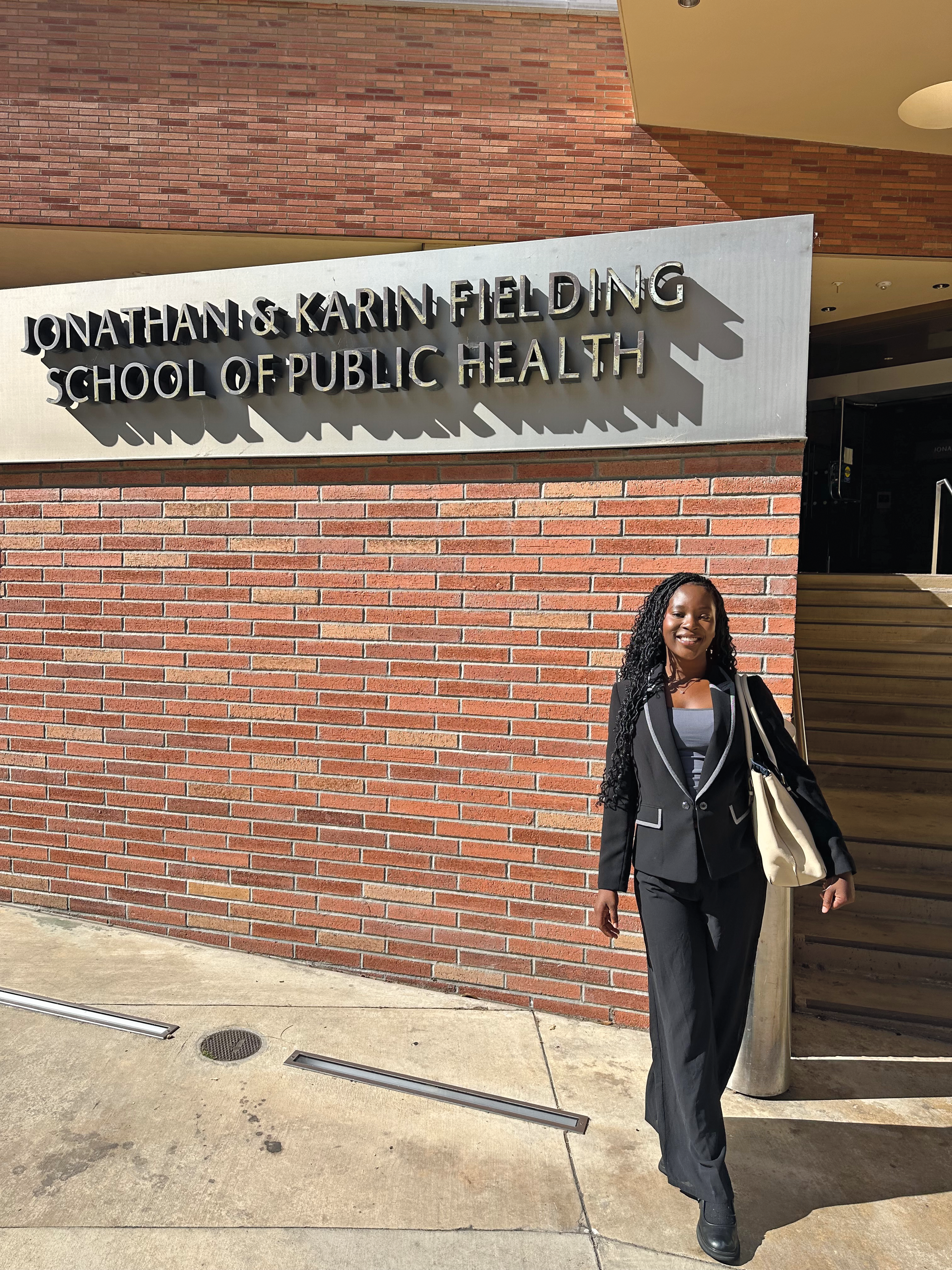
Even as a young child in Nigeria, Brenda Osagie was well aware of the difficulties people in her community had in accessing quality healthcare. Those inequities became even more apparent to Osagie when her family moved to the United States. After entering UCLA as a molecular, cell and developmental biology major, Osagie decided to change course. “Public health was everything I wanted,” she says. “It takes a holistic approach to tackling the global discrepancies I’ve seen firsthand.”
For the summer before her senior year, Osagie was part of the CDC/John R. Lewis Undergraduate Public Health Scholars Program at UCLA Fielding, one of seven such programs in the nation. As part of the experience, she did an internship with the California Black Women’s Health Project. Putting into practice what she’d learned in her first year as a public health major, Osagie conducted research on the disproportionate impact of Alzheimer’s disease on Black women and authored a policy brief addressing racial disparities and systemic barriers. Osagie has been admitted to UCLA Fielding’s MPH program for the fall, where she hopes to earn her degree in Health Policy and Management and use her education to reduce access barriers for underrepresented communities of color, whether in Nigeria or the United States. “You can see how much UCLA Fielding cares about us,” Osagie says of how she’s experienced FSPH as an undergraduate. “They want us to succeed, and they do everything to make this a tight-knit community.”
Student Profile
Matthew Vu, BS '25
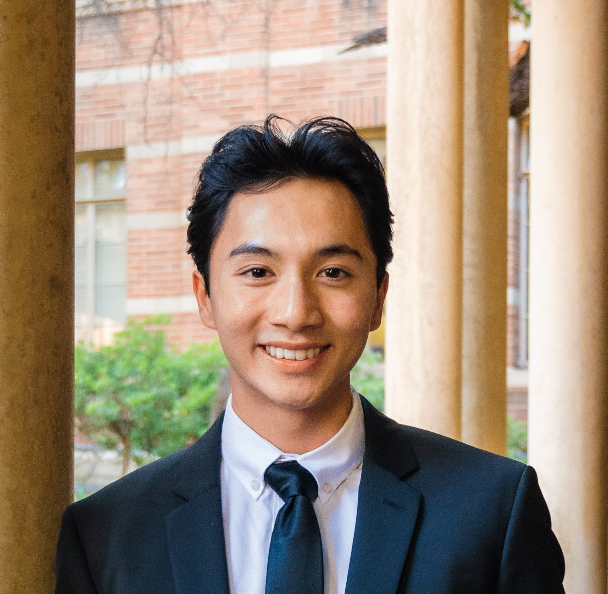
After both of his grandmothers were diagnosed with cancer in 2014, Matthew Vu resolved to become a physician. But as a high school student at the outset of the COVID-19 pandemic, Vu decided his medical career would involve more than treating individual patients. “The pandemic highlighted the inequities of our health systems,” Vu says. “I saw public health as a field I wanted to integrate into my career.” Vu entered UCLA intending to minor in public health, but when the major became an option during his sophomore year, he jumped at the chance to become part of the first cohort.
Vu expects to benefit from the grounding he received in biostatistics and epidemiology, as well as from the education about health inequities — reinforced by his experience as a volunteer providing street-side health and social services to unhoused people through the UCLA Mobile Clinic Project. He has enrolled as a medical student at UC San Diego beginning in the fall, more intent than ever on incorporating public health in his future medical practice. “I want to be a physician who works in communities and puts out research that addresses health inequities,” Vu says. “I believe everyone deserves the right to good-quality healthcare, and being around faculty and students who felt the same way motivated me to continue in that pursuit.”
Student Profile
Sierra Benayon-Abraham
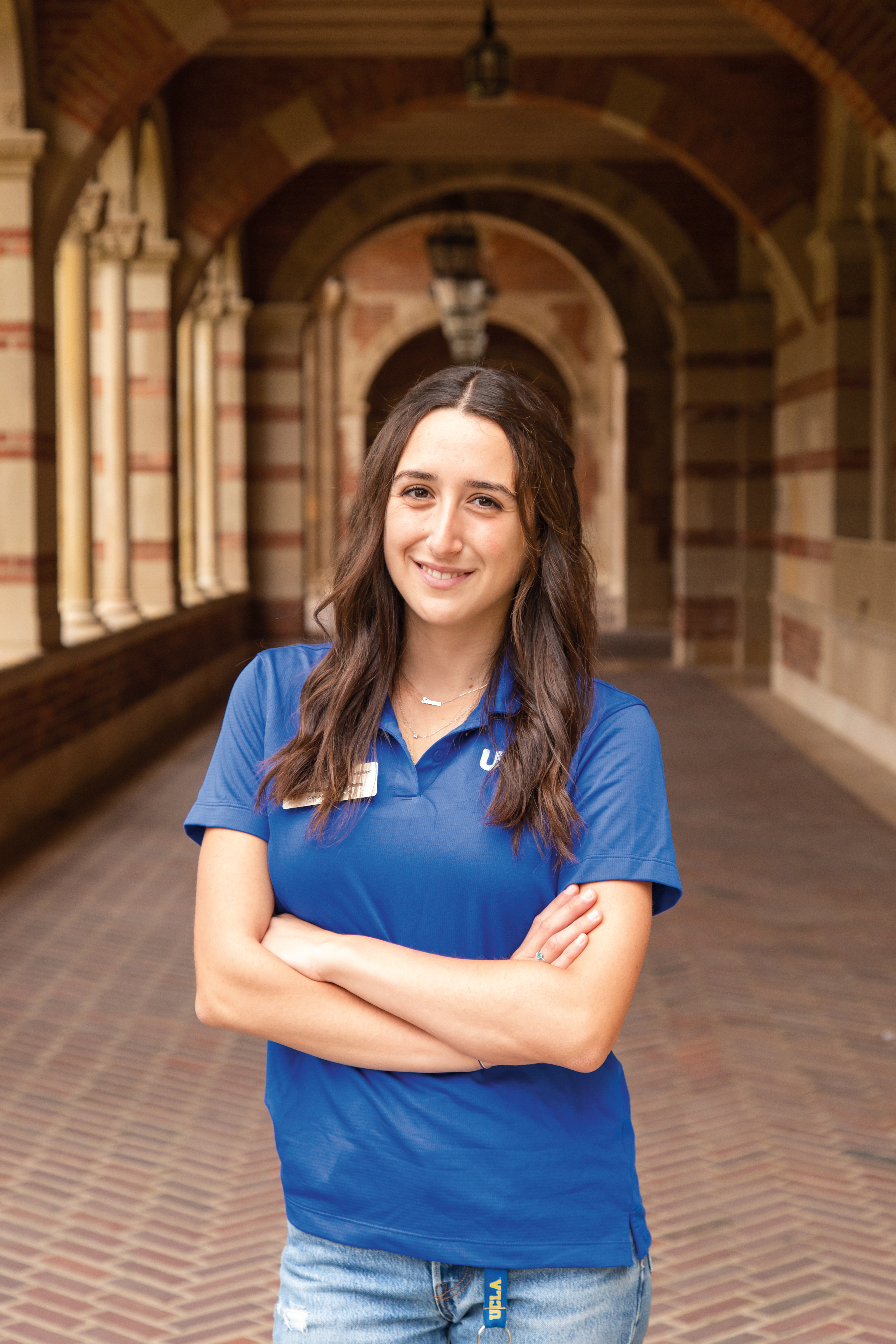
Before she took her first public health course at UCLA, Sierra Benayon-Abraham thought the field was primarily about measuring the health status of the population. After completing the curriculum toward her BA in Public Health, Benayon-Abraham says, “I know it’s that, but also so much more. If you’re interested in the biostatistics side, you can hone in there. If you’re interested in the community health sciences part of it, you can focus on that. And if you like it all, you can dip your toes in every aspect.”
Benayon-Abraham gravitated toward community health sciences and public health policy, ultimately deciding to augment the major with a double minor in community engagement and social change and entrepreneurship. She became passionate about exploring healthcare laws and public health legislation from a legal standpoint. “I love that you can take a deep dive into how certain communities are affected differently, and improve their outcomes through advocacy and new policies,” she says.
The realization that so many of her friends outside the major knew little about public health led Benayon-Abraham, as a reporter for the Daily Bruin campus newspaper, to launch an opinion column, “Beyond the Statute,” in which she explored the experiences of marginalized communities with public health policies. In the fall, BenayonAbraham will begin pursuing her master’s in journalism, after which she plans to go to law school with the intention of focusing on health law and eventually using her journalism background to write about public health topics.