How the UCLA Fielding School of Public Health faced the challenge of the 2025 Los Angeles County wildfires
Faculty, staff, and students have led the way to understanding the public health impact of the blazes, supporting recovery, and planning ahead.
Beginning literally in the first hours of the devastating 2025 Los Angeles County wildfires, UCLA Fielding School of Public Health faculty, staff, and students have rallied to respond, launching investigations into the impact of the blazes on public health and how to address the risk of similar fires in the future.
This work has ranged from the largest, on-going study of the fire’s public health impact, to tracking the health of firefighters, to training recovery and construction workers on how to do their work safely, and bringing free health and safety testing into the communities hit hardest in the Altadena and Palisades fires.
“This is truly an example of mission-driven research,” said UCLA Chancellor Dr. Julio Frenk, distinguished professor in UCLA Fielding's Department of Health Policy and Management. “It connects not only different disciplines but different levels of analysis, and it connects with communities and policymakers to ensure that discoveries are translated into action.”
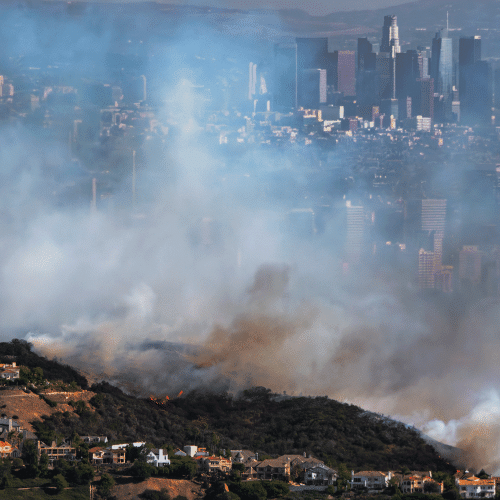
The January, 2025 blazes in Los Angeles County, in both the Pacific Palisades-Malibu area in western Los Angeles, adjacent to the Santa Monica Mountains, and the Altadena-Pasadena communities in the foothills of the San Gabriel Mountains, claimed at least 31 lives and damaged or destroyed more than 18,000 structures, according to the County.
At UCLA Fielding, the work began immediately, both to ensure the safety of staff and students at the school’s Westwood campus and to support those who were displaced by the fires, said Dr. David Eisenman, a physician and professor in the Department of Community Health Sciences and director of the UCLA Center for Public Health and Disasters.
“In some ways, our immediate response was similar to what we had to do, over a much longer period, when it came to crisis management during the COVID-19 pandemic – making certain our people were safe, supporting those who needed assistance, and keeping the school functioning and responsive to the shifting needs of the recovery effort,” Eisenman said. “But a huge element of public health as a discipline is emergency management, and our faculty are experts in just that; we study and practice, so we were ready – it's simply that the fires just occurred very quickly in comparison to the pandemic.”
Once immediate needs were met, faculty took on a wide range of research studies, ranging from immediate support and testing for first responders to providing key staff, planning, and execution of an unprecedented collective scientific effort to understand the short- and long-term health impacts of wildfires, the Los Angeles Fire Human Exposure and Long-Term Health Study (L.A. Fire HEALTH Study). The planned 10-year-long study, supported by the Spiegel Family Fund, is being conducted by a consortium led by researchers from the UCLA Fielding School; the University of California, Davis; the University of Texas, Austin; and the Harvard T.H. Chan School of Public Health, with expertise in environmental exposure assessment, health outcomes, wildfire risk assessment and management, and data science.
“The study has two primary objectives: First, to examine which pollutants are present, at what levels, where, and how they change over time; and second, to determine if the fires and aftermath are associated with chronic health effects in the nearby population,” said Dr. Michael Jerrett, professor in the Department of Environmental Health Sciences at the UCLA Fielding School and the Jonathan Fielding Chair in Climate Change and Public Health. “In southern California, and around the world, emergency preparedness for natural and man-made disasters is essential, and public health is a full partner in that preparedness.”
Jerrett leads UCLA Fielding’s contingent on the Fire HEALTH Study, which includes physicians, environmental health specialists, and data scientists.
"UCLA is really trying to fill the void, that we may have seen from federal government agencies, in supplying the public with credible public health guidance – this fire was quite unique in the sense that we had an enormous amount of human infrastructure burned (and) that has led to a myriad of toxic effects that we haven’t seen in a large urban area before," said Jerrett, who recently testified before the University of California’s Board of Regents on the school’s work on fire-related research. “Very large areas of Los Angeles were covered in heavy smoke, and our estimates are that about 9.5 million people were exposed to really heavy smoke and another 11 million experienced moderate smoke exposure, so this has the potential to generate significant health effects.”
The active work breaks down into several categories, including:
Research:
This work focuses on human health, air pollution, water pollution, and soil contamination. UCLA staff and faculty have begun 22 significant studies or research projects, which include:
- L.A. Fire HEALTH Study – this decade-long study includes mapping and understanding exposures during the fires, including emissions from the burning of vegetation and buildings and the composition of pollutants in the wildfire smoke.
- Even after wildfires are extinguished, smoke damage may continue to pose risks – this peer-reviewed study underscores the need to minimize indoor exposures during the recovery phase.
- Research finds wildland firefighters open to use of respirators – peer-reviewed study found that firefighters recognize long-term health risks of smoke exposure.
- Research finds chromium-6 in Palisades, Altadena cleanup zones – this work detected elevated levels of the carcinogen in air samples collected from the debris cleanup zones for the Eaton and Palisades wildfires.
- National Academies of Sciences, Engineering, and Medicine Cumulative Impact Assessment – this research, which used the 2025 Los Angeles County fires as a case study, worked to improve how federal, state, and local governments conduct risk assessment during – and after – a public health crisis.
- Air quality during 2025 Los Angeles wildfires and 2018 California blazes – these studies examined how air quality changed over space and time, both in the 2025 fires in Los Angeles County and the 2018 wildfire season statewide.
Recovery:
This work focuses on socioeconomic impacts and resiliency, including worker safety and mental health. Some 20 significant projects are underway, and current work in these areas include:
- CAP AIR - A community-driven model for post-wildfire air quality monitoring. A UCLA Fielding team built a network of 20 strategically placed particulate matter sensors powered by solar energy and connected via cellular network across western Los Angeles County in 2025; the project includes a user-friendly data dashboard to guide community action during the recovery and reconstruction phases, and community and philanthropic partners are supporting continuing the project through 2026.
- Respirator training for construction workers – In 2025, a UCLA Fielding team trained, tested, performed medical evaluations, and distributed respirators with cartridges, at sites across Los Angeles County, to more than 400 workers performing debris removal and smoke remediation. The program has been supported by the state of California, labor unions, and community partners, and staff are planning to continue the training sessions if funding is available.
- Soil testing – A UCLA Fielding-led team conducted a series of three separate soil testing “field days,” where residents of the Crescenta and San Gabriel Valleys could bring samples from their properties in for free testing. More than 250 residents participated, and community partners have expressed interest in continuing the project in 2026.
- The impact of the wildfires on Los Angeles’ unhoused community – An on-going effort led by UCLA Fielding faculty that studies how mental health issues impact homelessness has expanded to focus on how the wildfires factor into these issues.
Support across campus and the region:
UCLA Fielding faculty and staff also supporting the university’s various interdisciplinary programs focused on fire recovery, including more than 30 studies looking at rebuilding and the economic impact of the disasters, including work on transportation, infrastructure, housing, and financial losses. This included:
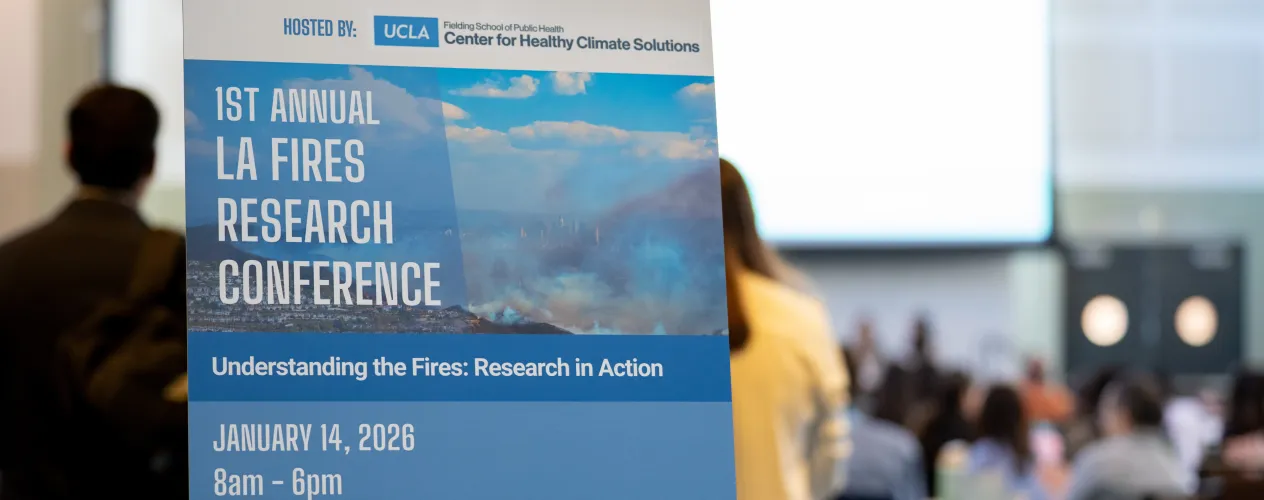
- In January, the school co-hosted an academic conference on the fire aftermath, the “LA Fire Health Research Conference.” The event was held on campus at UCLA, and included presentations by scientists from across the university and across the nation, as well as health professionals, community leaders, and policymakers, including from UCLA Health, and generated extensive media coverage.
- In addition, UCLA Fielding has created a public database for easy access to published research work, accessible at UCLA Fielding Fire Research.