"Want a better future for California? Invest in Latinos"
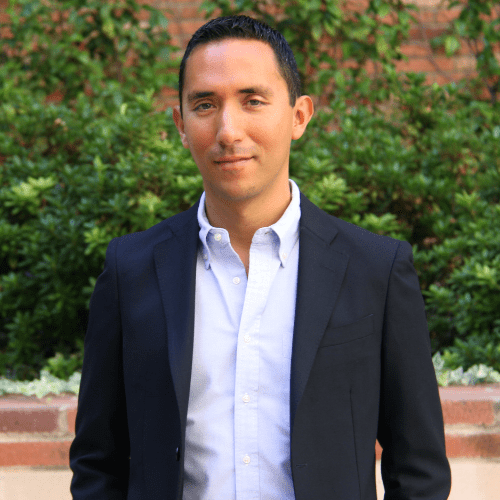
The "California Latino GDP Report" - which includes health issues - is co-authored by UCLA Fielding's Dr. David Hayes-Bautista and Dr. Paul Hsu.

Latinos are California’s economic edge, according to the latest report from the Latino GDP Project.
“The reality is that Latinos are responsible for California’s economic vitality, especially in terms of labor force growth and participation,” said UCLA Fielding’s Dr. David Hayes-Bautista, professor in the Department of Health Policy and Management and a co-author of the report.
Researchers at California Lutheran University and UCLA – including UCLA Fielding’s Dr. Paul Hsu, assistant professor in the Department of Epidemiology - found the Golden State’s Latino GDP, which reached $1.07 trillion in 2024, helped the state just outpace the nation’s economic growth — a milestone it had not achieved since the start of the COVID-19 pandemic.
The researchers also found that in 2024, California Latino death rates from all five leading causes of death - heart disease, cancer, unintentional injuries, chronic lower respiratory disease, and stroke - are once again far lower than non-Hispanic whites. In 2024, California Latinos enjoyed an age-adjusted death rate that was 30 percent lower for heart disease and 22 percent lower for cancer.
"In 2023, the most recent year for which we have data, U.S. Latinos enjoyed a life expectancy at birth of 81.3 years,” Hsu said. “That represents a full 2.9 years longer than the life expectancy for Non-Hispanic Whites and a restoration of the Latino health premium."
The key to California’s economic success
The latest data shows the California Latino GDP went up from $0.99 trillion in 2023 (revised from the previously reported $1.0 trillion) and once again accounts for a quarter of the total U.S. Latino GDP.
When compared to other state economies, the California Latino GDP would be the sixth largest in the U.S., larger than Pennsylvania’s — and even some national economies.
“At $1.07 trillion, the California Latino GDP sits right between Switzerland at $0.97 trillion and Saudi Arabia at $1.21 trillion,” said Dr. Dan Hamilton, a professor of quantitative economics at Cal Lutheran and principal investigator of the report. “It would be large enough to qualify as a member of the prestigious G20.”
The team’s analysis of population and labor force data underscores the critical role that Latinos play in the state’s economic success:
- Even as California’s non-Latino population declined in five of the past six years, the Latino population growth has been positive. Despite being only 41% of California’s population, Latinos are responsible for 95% of the state’s population growth since 2010.
- The number of non-Latino workers in California has shrunk in the past four years to levels last seen in 2016, while Latino labor force growth has remained steady.
- In 2024, Latino labor force participation was 67%, meaning Latinos were 5.1 percentage points more likely to be actively working than their non-Latino counterparts. California Latinos’ labor force participation premium sits at an all-time high.
Ensuring a bright future
From 1997 to 2019, California’s economy grew 57% faster than the nation’s.
“For decades, California’s relatively rapid economic growth versus the U.S. was a foregone conclusion,” said Dr. Matthew Fienup, an economist at Cal Lutheran and also a co-author of the report.
Since the pandemic, however, the state has fallen behind. From 2019 to 2024, California’s GDP grew 12.7% slower than U.S. GDP. Without Latinos, that gap would have been more than 37%.
In 2024, California’s GDP again grew faster than that of the U.S., although only modestly. During that year, the state’s non-Latino economy continued to grow more slowly than the nation’s.
“The return of California’s growth premium is entirely due to Latinos,” said Hayes-Bautista, director of the Center for the Study of Latino Health and Culture at UCLA.
The researchers see the ongoing mass deportation efforts targeting Latinos as potentially undermining economic growth in the United States and California.
They emphasize that investments in Latinos, such as expanding access to higher education and health services, are integral to sustaining the substantial positive impacts of Latinos’ economic contributions on the state and the United States.
“It is impossible to imagine a bright future for California without Latinos,” said Hayes-Bautista, co-founder of the research initiative and a distinguished professor of medicine at UCLA.
Additional highlights
- California Latinos represent a $783 billion consumption market in 2024, larger than the entire economy of 37 individual states, including Massachusetts ($778.5 billion).
- The number of Latinos in California with a bachelor’s degree or higher is increasing 3.5 times faster than the number of highly educated non-Latinos.
- From 2010 to 2024, the number of California Latinos who own a home rose 26.3%, while the number of non-Latino homeowners increased less than 1%. Despite being only 41% of California’s population, Latinos are responsible for 89% of the state’s growth in homeownership.